Teaching as Reflective Practice: Resources
Reflect on one’s teaching practices and beliefs to maximize effectiveness, self-awareness, and continual improvement.
Growth as an effective and inclusive instructor is a continual process involving self-reflection, critique, and ongoing learning. Self-reflection includes identifying personal areas of bias or weakness in teaching. One’s beliefs about students, teaching and learning feed directly into how one practices teaching. Engaging in a reflective practice ensures that our beliefs, values, and practices are in alignment through continual growth and adjustment.
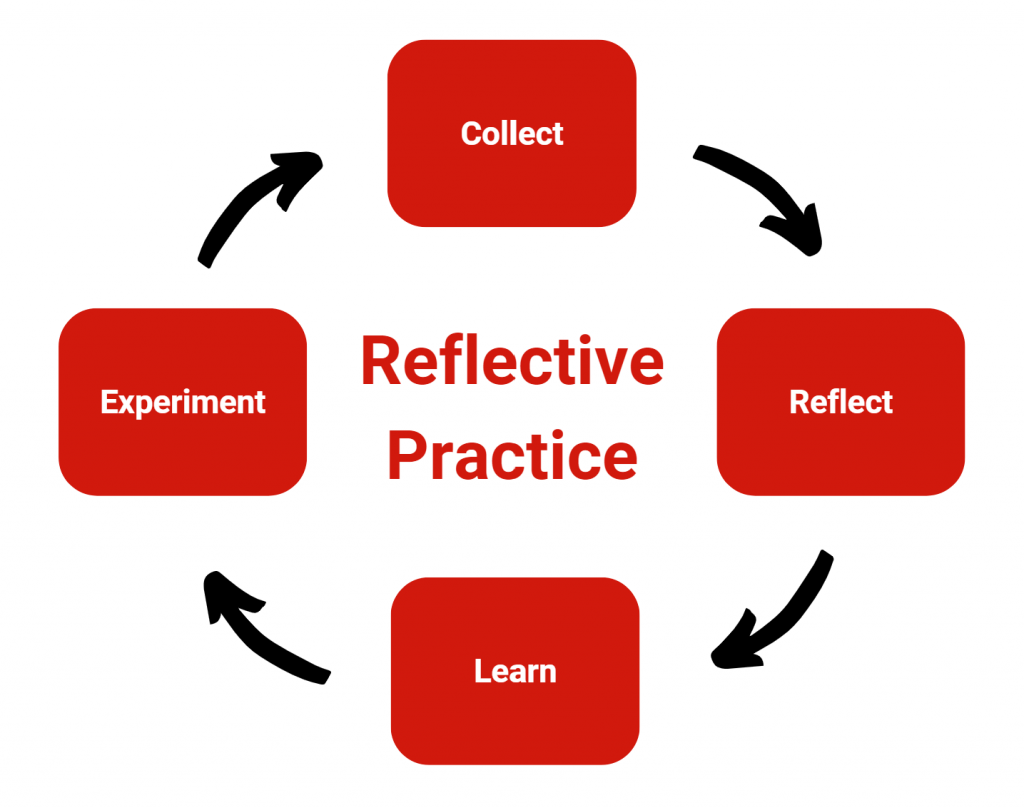
Reflective practice is a teaching principle that supports all the others: reflecting as and after you design your course, as you implement supportive pedagogy, inclusivity, and universal design for learning, and as you incorporate disciplinary excellence will allow you to observe and adapt your teaching practices. Exemplary instructors model life-long learning for their students through their own engagement with their discipline, their teaching, and the ever-evolving students in their courses.
What Strong Instructors Do
- Examine their current portfolio of pedagogical strategies, even ones that have worked successfully on multiple occasions.
- Incorporate regular informal feedback from students and adapt pedagogical approaches to best support student success.
- Discover new ways to support student success:
- Explore ways to foster inclusive engagement with students.
- Experiment with teaching, proactively seeking out novel approaches, activities, and resources.
- Create and participate in communities of fellow instructors that allow for support, peer review, pedagogical strategizing, and critical engagement with teaching practices.
- Repeat the cycle, beginning with further reflection.
Faculty Resources
Collect Information About Your Teaching
Consciously and consistently collecting evidence about your teaching—from students, peers, and your own reflective practice—can deepen your understanding of students' experiences and help strengthen your teaching effectiveness.

University Student Course Surveys
Student course surveys provide one important source of evidence about the student learning experience and can complement other forms of teaching reflection, such as peer observations and self-reflection.

Peer Observations
Montclair State University is committed to excellence in teaching. Peer observation is a means of enhancing the quality of teaching and learning, and supporting effective faculty development. The benefits of successful peer observation of teaching include:
Plan Your Teaching Development
Just as faculty need to plan their research development, faculty need also to plan their teaching development. This page consolidates resources and strategies for creating an actionable teaching development plan.