
Collaborative Learning: Groups and Teams
Collaborative learning, whether peer-to-peer or in larger groups, allows students to engage actively together in the course’s work while also developing teamwork skills that have real-world applications.
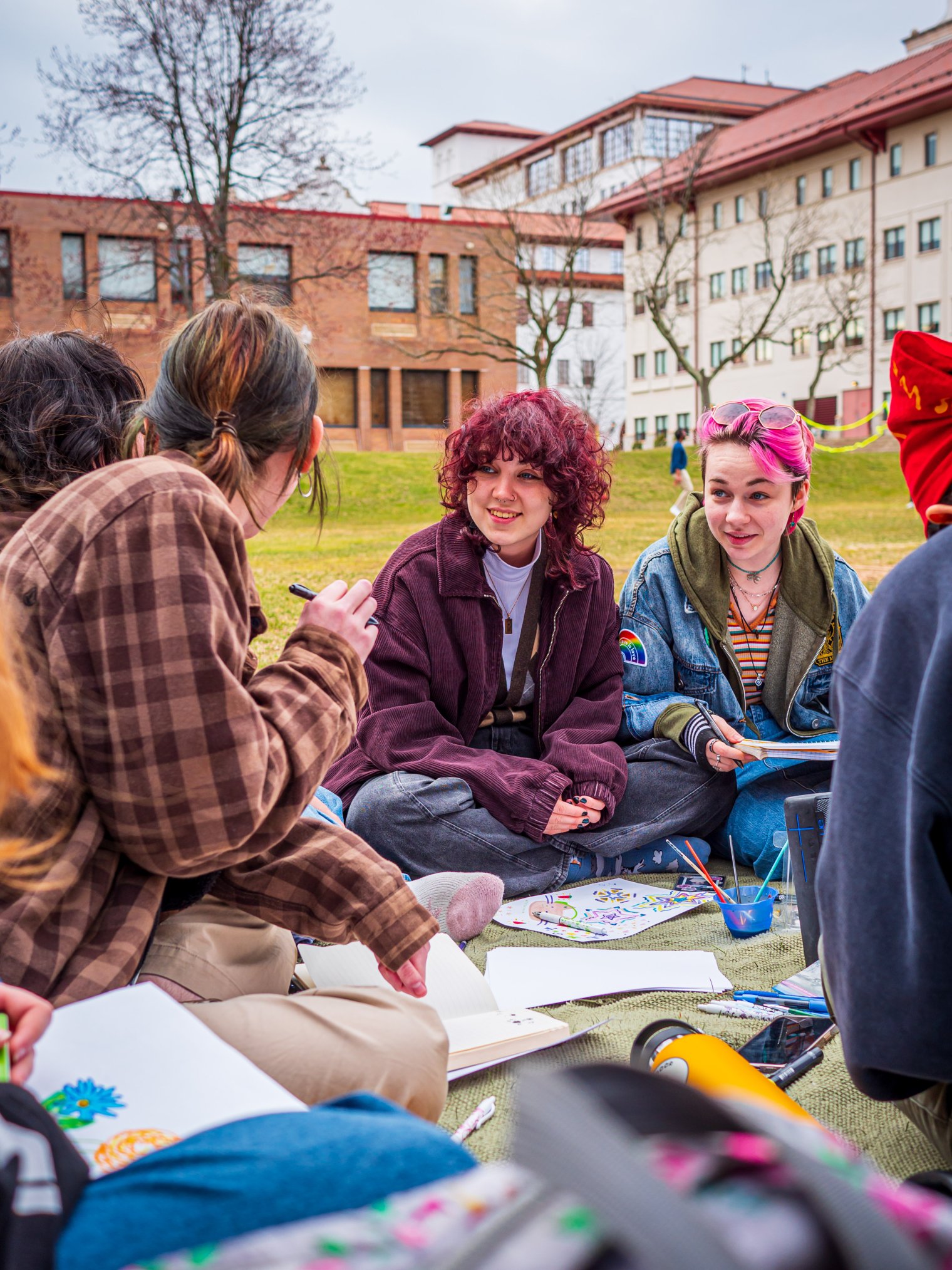
While some differentiate between groups (whose members work independently and then come together to combine their work) and teams (whose members work together and have a team goal), group and team assignments share many characteristics.
Group Assignments and Learning Objectives
Before considering using any group assignment, be clear on its objective. What is the clear purpose of the assignment, and how does it align to the overall course learning objectives? How will using groups help students achieve the objective? How will you communicate the importance of group work to your students? How will you address resistance to group learning? What real-world value will this group work have?
Example learning objectives (adapted from Linder, 2016).
- Upon successful completion of this course, students will be able to consider the contributions of others.
- Upon successful completion of this course, students will be able to contribute questions or concerns in a respectful way.
- Upon successful completion of this course, students will be able to develop a common goal.
Additional skills group assignments can help students develop include:
- Teamwork skills (working within team dynamics, leadership).
- Analytical and cognitive skills (analyzing task requirements, questioning, critically interpreting material, evaluating the work of others).
- Collaborative skills (conflict management and resolution, accepting intellectual criticism, flexibility, negotiation and compromise).
- Organizational and time management skills.
Types of Group Assignments
- Small assignments (one time or short-term)
- A discussion that involves coming to consensus on a problem or question.
- Collaboratively annotating a course reading and co-writing a summary.
- Co-creating a blog or wiki that generates and shares new knowledge around a course content area (research & writing)
- Large assignments (long-term, multiple tasks over several weeks)
- Creating a multimedia artifact that has a series of tasks and processes for development (videos, podcasts, digital graphics, performance);
- Co-writing a major report or presentation that requires processes of research and writing
Sample Scaffolding Assignments
Collaborative Project Scaffolding How it Works Intended Collaboration Effects Two Truths and a Lie Activity In small-group discussion, each member shares three personal “facts,” two of which are true and one a lie. Group members post their guesses about which facts are actually lies. After a fixed interval, members self-disclose which was a lie. Builds social connections, demonstrates accountability, models the use of interim milestones in longer projects, and begins to establish psychological safety. Valuing Constructive Conflict Teams share examples of conflicts from past experiences with group work, perhaps from childhood, professional, or college experiences. Teams discuss which conflicts have yielded positive outcomes and then compare and contrast constructive and destructive conflict. Builds group potency, establishes boundaries for acceptable communication, creates group value of diversity, identifies benefits of constructive conflict, and creates shared and nuanced vocabulary about conflict. Reflecting on Strengths and Challenges of Group Work Before the project begins, group members brainstorm a collaborative document expressing strengths and challenges of group work, noting specific challenges for online collaborations. Teams generate a list of strengths and concerns and then collectively prioritize them based on degree of severity. Builds task cohesion, increases psychological safety, establishes the value of proactively avoiding problems, builds awareness of role responsibility, and establishes group values about which behaviors are most undesirable for the team. Preventing and Addressing Team Problems Building on the prioritized list of concerns, teams discuss strategies for preventing problems and dealing with them if they do arise. Teams produce a strategy document that helps teams agree on a plan for preventing concerning situations and responding to concerns as they arise. Reduces apprehension, builds team and task cohesion, increases psychological safety, creates a shared understanding of team dynamics, and builds team interdependence. Advice for Future Groups At the conclusion of the project, teams can create a letter or video message for students in future teams providing advice for approaching collaborative work productively. These artifacts can be used for future teams to orient students to collaborative work. Provides authentic student-to-student feedback on collaborative work, introduces nuances specific to the context of the class itself, and normalizes collaborative work as a valuable educational practice. Adapted from Linder and Hayes (2018).