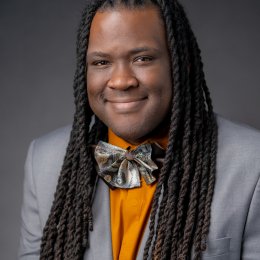
Professor Jason Williams standing in class and talking to a student while the class works on group project

Our mission is to advance research and offer a rigorous course of study examining the intersection of justice, law, policy and social change. We analyze the conception and practice of justice through sociological, philosophical, criminological, legal and political lenses. We also seek to bridge the gap between the various social science and legal disciplines in order to gain new insights on a wide range of issues concerning social justice. For this reason, the Justice Studies major is uniquely interdisciplinary. Drawing on the expertise of its faculty from the fields of criminology, sociology, political theory, and law the Justice Studies major explores justice in its broadest conception. Through the unifying core classes, students gain a mastery of justice theories from multidisciplinary and intersectional perspectives.  In sum, our mission is to teach students to think critically and become productive members of the community who recognize and respond to injustice in its many manifestations.

Make a Gift

Please consider a monetary gift to the Justice Studies Department. No donation is too small.  Our department is committed to supporting students and providing quality lectures and presentations for both the campus and community. Your gift will help support the creation of scholarships and events sponsored by the department.

To give online, please type in “Justice Studies Department” in the “Gift Designation” field below.

Our Programs

A student leans on a pew inside a courtroom

Major and Minors

Justice Studies is an interdisciplinary program where passionate, driven students become leaders for social change.

Concentrations Offered

International Justice; Criminal Justice

Minors 

Criminal JusticeJustice and FamiliesSocial Justice: Gender, Race and Queerness



A collection of blue cardboard cutout people wearing paper signs with details about human trafficking

Global Human Trafficking Certificate

The Global Human Trafficking Certificate delivers a deep multidisciplinary understanding of the causes, consequences and solutions to human trafficking around the world. 

Internship Experience

The purpose of the required internship is to provide students with direct experience in their concentrated area. The required capstone course provides a formal structure for students to reflect on their internship and connect it to both their academic history and future career goals. Class discussions include pertinent topics such as; ethical and professional responsibility, confidentiality, conflict resolution, resume writing and interviewing skills, professionalism, organizational models, and exploration of career options.

Internship Applications and Deadlines

All Justice Studies Major students are required to complete JUST497: Senior Seminar and Internship.

All Global Human Trafficking Certificate students are required to complete JUST498: Internship Experience. (Justice Studies Majors with a Global Human Trafficking Certificate will complete JUST497 and a credit adjustment will be issued to count JUST497 for JUST498.)

Students must submit their application in accordance with the deadline they plan to enroll. Applications must be submitted through your Montclair email account.

Application for Spring 2027 JUST 497
DEADLINE: September 1

Application for Fall 2027 JUST 498
(Only for Human Trafficking Certificate Students who are not Justice Studies majors)
DEADLINE: September 1

THERE ARE NO EXCEPTIONS TO THE APPLICATION DEADLINES NOTED BELOW.

JUST497/JUST498 Application Deadlines:
Applications for the Summer open in December and are due by February 15th.
Applications for the Fall open in December and are due by March 1st.
Applications for the Spring open in May and are due by September 1st.

After submitting the online application, you should receive a confirmation message and an email with your submitted responses immediately.  If you do not receive these, your application may not have been successfully submitted and you should follow up with the Internship Coordinator, Amanda Choo.

Internship Information

All Justice Studies Majors must successfully complete the application process in order to receive permission to register for JUST 497.  For students who anticipate registering for JUST 497, the below requirements must be met by the start of the semester you are applying for. The requirements do not need to be met at the time of application.

  • Completion of JUST204 with a minimum grade of C-
  • Completion of JUST205 with a minimum grade of C-
  • Completion of JUST300 with a minimum grade of C-
  • Completion of JUST310 with a minimum grade of C-
  • Completion of five (5) concentration electives (which include the required concentration electives)
  • Students in the Criminal Justice Concentration must have a minimum grade point average (GPA) of 2.0 overall, in the major and in the concentration
  • Students in the International Justice Concentration must have a minimum grade point average (GPA) of 2.75 overall, in the major and in the concentration
  • Students must have junior or senior status and submit the application by the designated deadline

All Global Human Trafficking Certificate students must have passed JUST355: Human Trafficking prior to taking JUST 498.

Students must submit their application and meet the eligibility requirements by the following DEADLINES:

SUMMER:  February 15th for JUST497/JUST498
FALL:  March 1st for JUST497/JUST498
SPRING:  September 1st for JUST497/JUST498
All applications must be completed and submitted online.

  • Students are encouraged to submit the application as soon as possible.
  • Students are responsible for checking their Montclair email for important updates about the internship process.
  • A prior arrest or conviction may exclude students from certain placements. Most internship sites require a background check. You must advise the Internship Coordinator, if you have a prior arrest, conviction or expungement.  Students who conceal this information jeopardize completion of the internship requirement and may prolong graduation.
  • Internships require 90 hours of fieldwork over the designated semester. On average, most students intern 1-2 days per week.
  • All self-placements must be approved by the Department. It is encouraged to begin reviewing and searching for internships of interest in preparation for the course.
  • Students must create a well-designed and grammatically correct resume with no spelling errors. View our Career Resources.
  • Students with extenuating circumstances where an internship may cause an unreasonable hardship may be given approval to waive the internship requirement. All students must still complete the application by the designated deadline and complete the appeal process embedded in the application. Appeals will be reviewed by a committee of faculty and staff and students will be notified if approved or denied.

Careers

Recognizing and responding to injustice will become your professional calling card, whether you’re going on to graduate studies or a career in law, law enforcement, corrections, government, social services or the nonprofit world.

  • Law enforcement at local, county, state and federal agencies
  • Law firms/ all areas of legal practice
  • Civil rights agencies
  • Corrections
  • Social service agencies
  • Government agencies
  • Human welfare agencies
  • Health agencies
  • Parole
  • Probation
  • Prosecutor’s Office
  • Public Defender’s Office
  • National and International social policy organizations
  • Superior and Federal courts
  • Public and private non-profit agencies
  • Law
  • Criminal Justice
  • Public Administration
  • Security Studies
  • Human Resources
  • Social Work
  • Business
  • Psychology
  • Child Advocacy
  • Legislative Affairs
  • Counseling
  • Public Health

Student Organizations

A college professor speaks to a breakout group of students in his class

Justice Studies Club

The Justice Studies Club is a student-run organization. Open to all justice studies majors and minors, the club holds monthly meetings in Dickson Hall.  We regularly invite guest speakers from a variety of professional backgrounds to share career experiences and information.  As a club we raise funds, do community service and seek to raise awareness on issues related to justice.

A college student works on a poster in a classroom while another student looks on

Honor Society - Alpha Phi Sigma (APS)

The National Criminal Justice Honor Society, recognizes academic excellence.  Membership is open to qualifying students who have completed at least four (4) criminal justice courses and fulfilled the Grade Point Average (GPA) requirements for acceptance.

Frequently Asked Questions

A: Degree-seeking undergraduate students may use the Undergraduate Major/Minor Change online form to request a change to their degree, major, minor and/or concentration. All requests to add a major, minor and/or concentration must be reviewed and certified by your new College/School designee before being made official. If approved, you will receive an email with a confirmation of approval.

A: You must choose at least one concentration: International Justice or Criminal Justice. You cannot be admitted into the major without choosing a concentration. However, you may choose both concentrations.

A: Yes. Students may declare more than one concentration. A maximum of six (6) credits can be used to overlap (“double dip”) between concentrations. Students will need 24 credits for their first concentration and 18 credits for their second concentration.

A: There is no limit to the number of credits that can overlap between GenEds and major courses.

A: Double majors can overlap an unlimited number of credits. Double concentrations in the same major have a limit of six (6) overlapping credits.

A: There is no limit to the number of credits that can be transferred, if the courses apply to the major.  Transfer credit evaluations are done by the Office of Admissions. Credit adjustments and determinations of DPT Electives must be done on a case-by-case basis with the student’s academic advisor.

A: Yes. Students can register for SOCI240 Statistics for Social Research.

A: Majors are not permitted to take any of the courses in the program on a pass/fail basis.

A: Yes.  All concentrations have a GPA requirement. The Criminal Justice concentration has a 2.0 GPA requirement. The Paralegal Studies concentration has a 2.75 GPA requirement. The International Justice concentration has a 2.75 GPA requirement. All students in the Justice Studies major must obtain a minimum grade of C- or better in the following core courses: JUST204, JUST205, JUST300 and JUST310. Students who fail to meet the grade requirement must repeat the course. These four (4) core courses must be completed prior to enrolling in JUST497 Senior Seminar and Internship Experience.

A: The Justice Studies major is open to full-time and part-time students. Courses are offered both during the day and evening, as well as online. Core courses are regularly offered on a day and evening schedule. Electives are also offered regularly offered, however, all electives are not offered during both day and evening, or every semester. Students should check the Schedule of Courses each semester and meet with their Academic Advisor to determine the best course of study on an individual basis.

A: Our programs will cultivate the ability to think critically, to act ethically, and help students develop an understanding of global issues and their responsibilities as citizens of the world. The department offers a wide range of interdisciplinary fields of study allowing our students pursue a wide variety of careers.

Our Faculty

1/

Contact Us