
A World of Possibility in a Patch of Grass
How EcoExplorers helped elementary teachers rediscover science and bring that sense of wonder back to their students
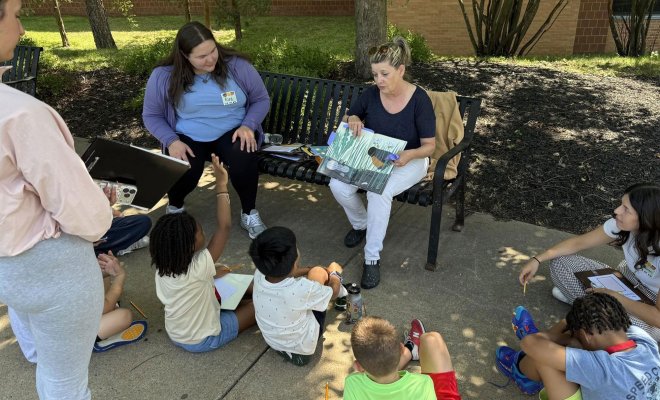
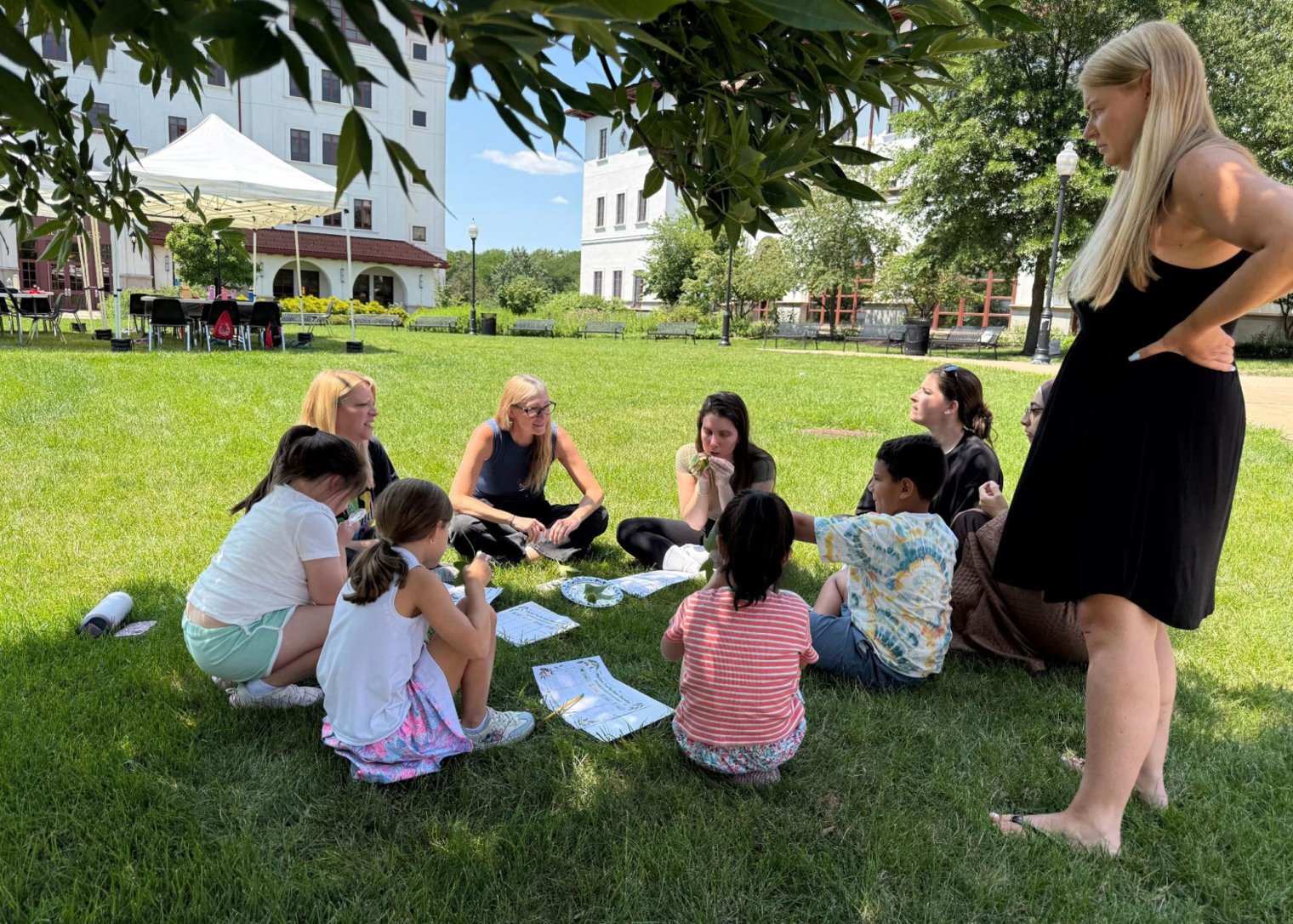
On the final day of the 2026 EcoExplorers Elementary STEM Academy, teachers put their new approaches into practice with children in the Montclair State University epiSTEMic program.
I didn’t realize how accessible science is.
— Ms. Carson DiDio, Grade 1 teacher, Fair Lawn Public Schools
Science Was Everywhere. Teachers Just Needed Time to See It.
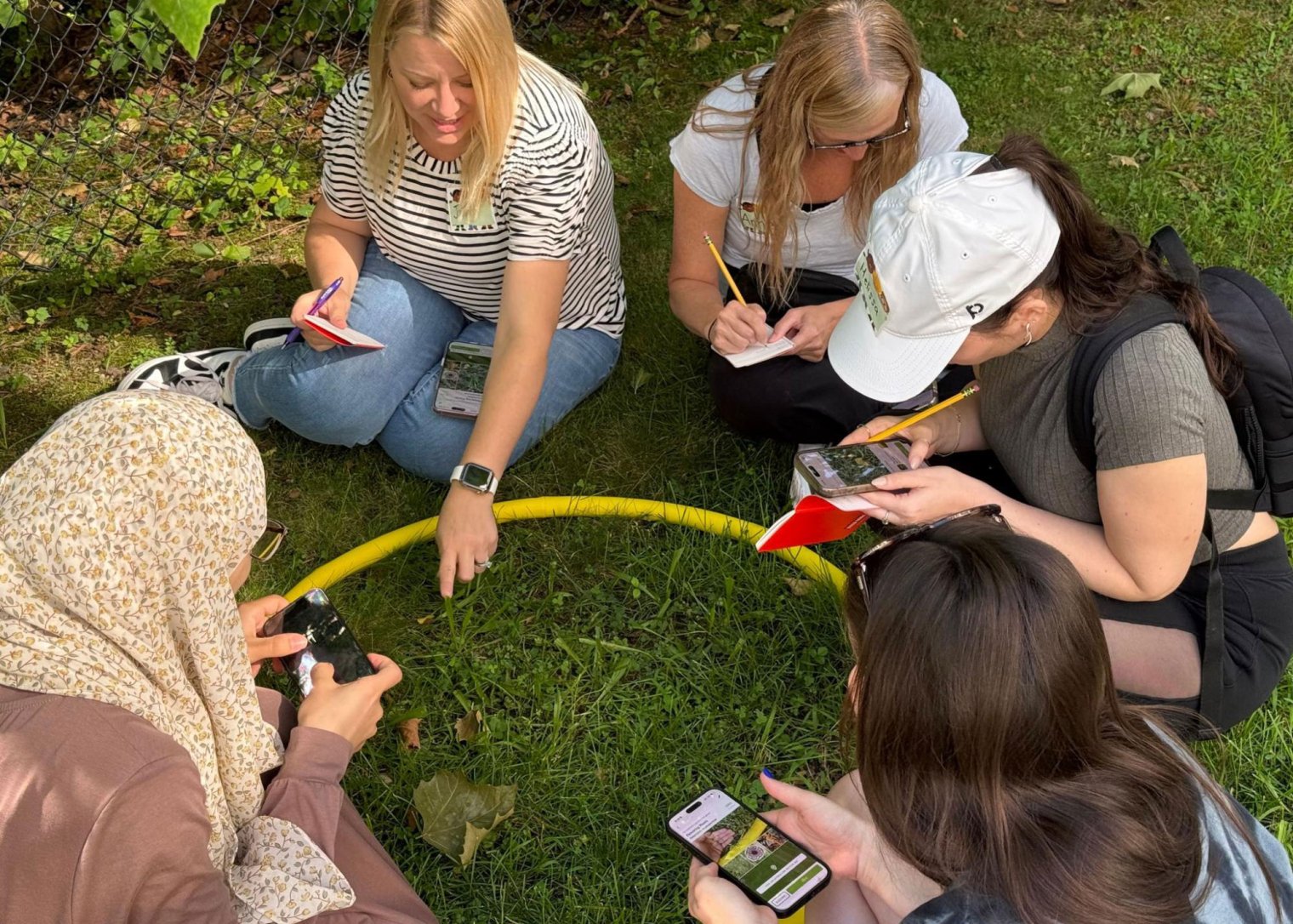
At first glance, the lawn outside the Center for Environmental and Life Sciences building looked like just that: a lawn. Then a group of elementary teachers placed a hula hoop quadrat on the grass, leaned closer, and began to count. What appeared uniform from a distance revealed different plants, insects, textures, patterns, and questions. A small patch of ground had become a field site.
That moment captured the central idea of the 2026 EcoExplorers Elementary STEM Academy for teachers: meaningful science does not have to begin with expensive equipment, an elaborate laboratory, or a distant wilderness. It can begin in a schoolyard, beside a sidewalk, beneath a bird feeder, or anywhere children are encouraged to observe carefully and ask what they notice.
Designed for Teachers Who Wanted to Grow
Held July 20-23, 2026, EcoExplorers brought together 16 elementary teachers, four pre-service science teachers, four mentor science teachers, and a team of facilitators through PRISM: Professional Resources in Science and Mathematics. The 16 classroom teachers were selected from nearly 100 applicants, with priority given to educators who wanted greater confidence and practical support for teaching science.
Created and facilitated by Montclair Public Schools science teachers Susan Bartol and Susan Eckert and Montclair State University biology professor Scott Kight, the program was intentionally welcoming. Participants did not need to arrive as science specialists. They needed curiosity, a willingness to try, and a commitment to create more opportunities for children to investigate the natural world.
Across four collaborative teams, elementary teachers worked alongside mentor teachers and pre-service teachers from the College of Science and Mathematics Science Teaching Program. This structure allowed ideas to move in every direction: experienced teachers shared knowledge of children and classrooms, science teacher mentors supported planning and risk-taking, and future teachers gained authentic experience designing lessons with practicing professionals.
As a pre-service teacher it was great to work with teachers who are already in the field and have gained a lot of experience making lessons like how we did. I always had a hard time making lesson plans but it flowed so naturally I don't feel as nervous about creating them anymore, especially since it was so simple.
— Ms. Ameenah Rajab, Physics major and pre-service teacher, Montclair State University
Four Days From Exploration to Teaching
Day 1: Looking closely
The academy began with science identity, outdoor observation, and the lawn quadrat investigation. Participants collected and compared evidence, connected the work to elementary science standards, and considered how their own comfort with science influences the experiences they create for children.
Day 2: Birds, bees, and community science
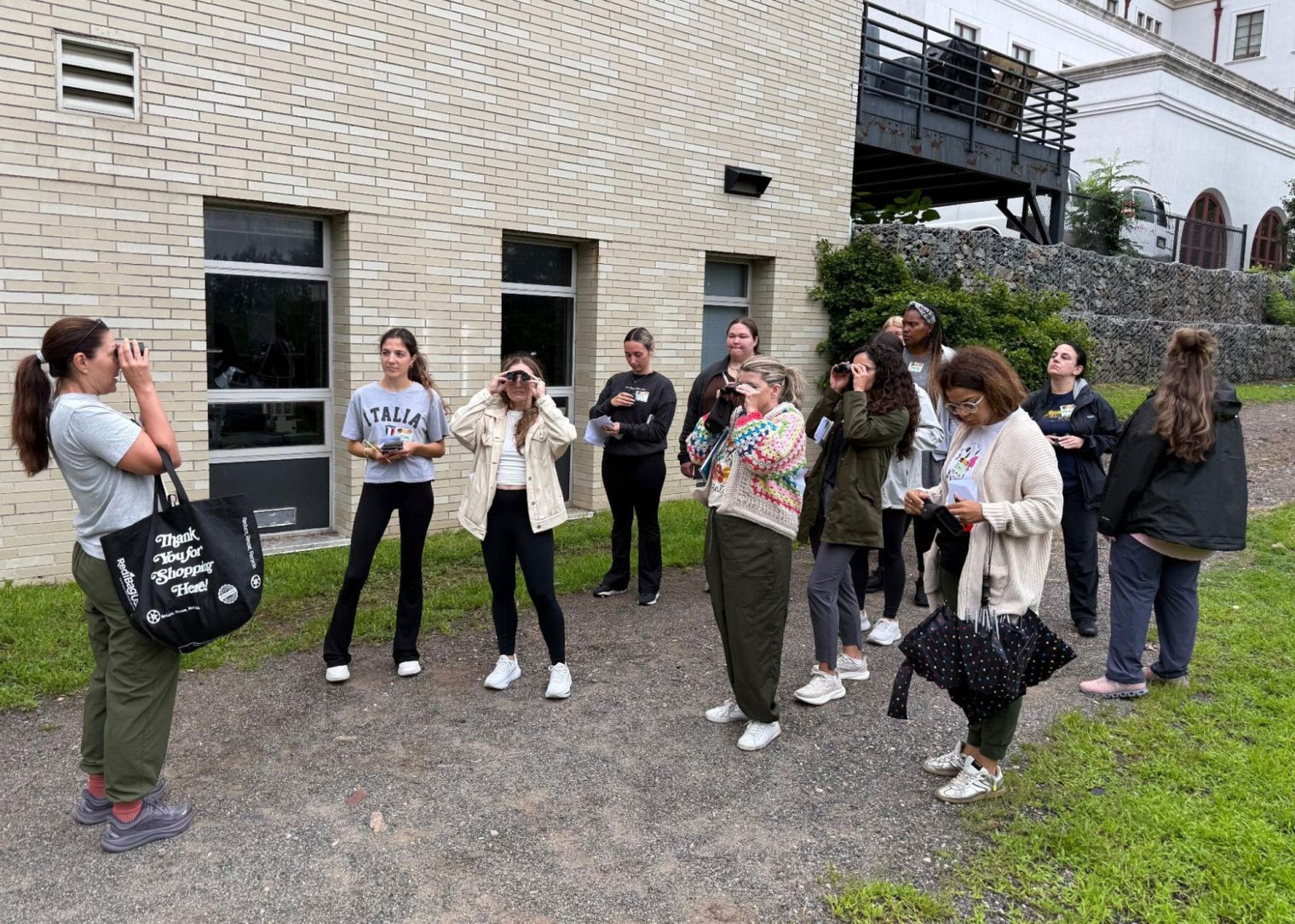
Participants expanded their field of view through bird observation, pollinator counts, soil investigations, modeling, and citizen-science resources. They practiced transforming simple acts like looking, listening, counting, and recording into purposeful learning.
Day 3: A living classroom
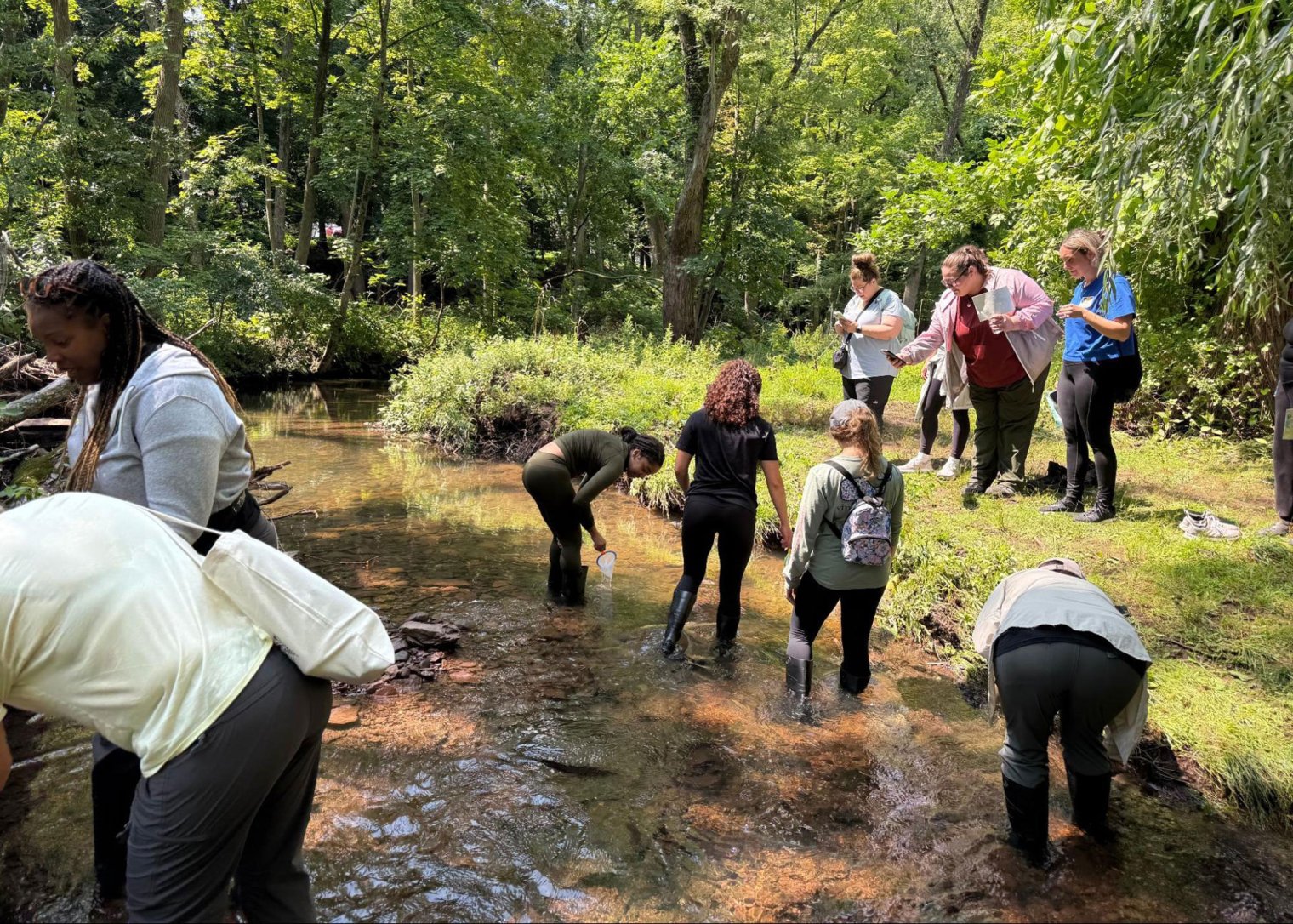
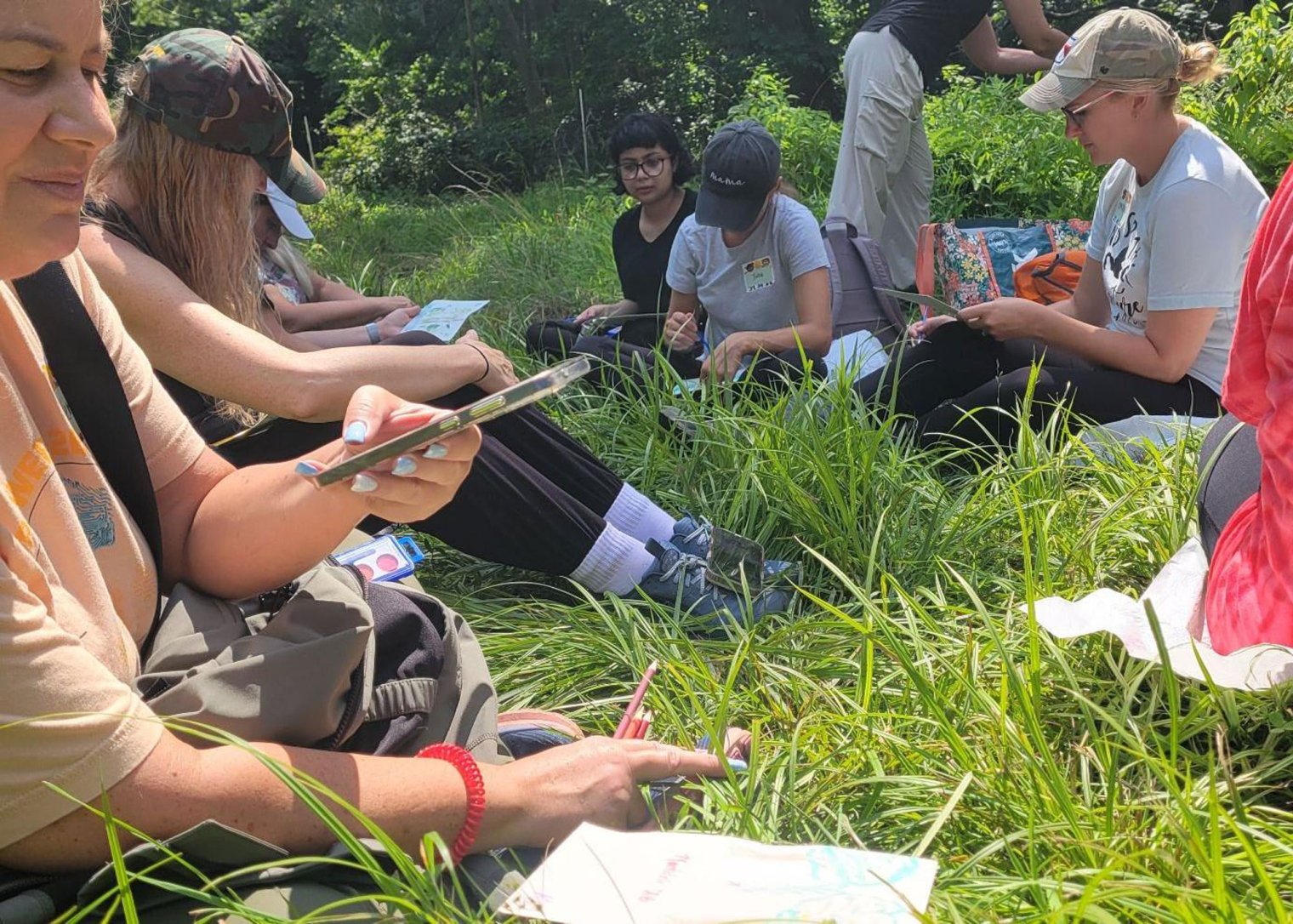
At the nearby Alonzo Bonsal Wildlife Preserve, the cohort explored streams, birds, plants, fungi, sound, art, and biodiversity. Nature journaling and a BioBlitz helped teachers experience how one nearby place can support science, mathematics, literacy, creativity, and environmental awareness.
You can make a lesson out of the smallest things, even just a small patch of grass.
— Ms. Tasneem Abdulazeez, Biology major and pre-service teacher, Montclair State University
Day 4: Putting learning into children’s hands
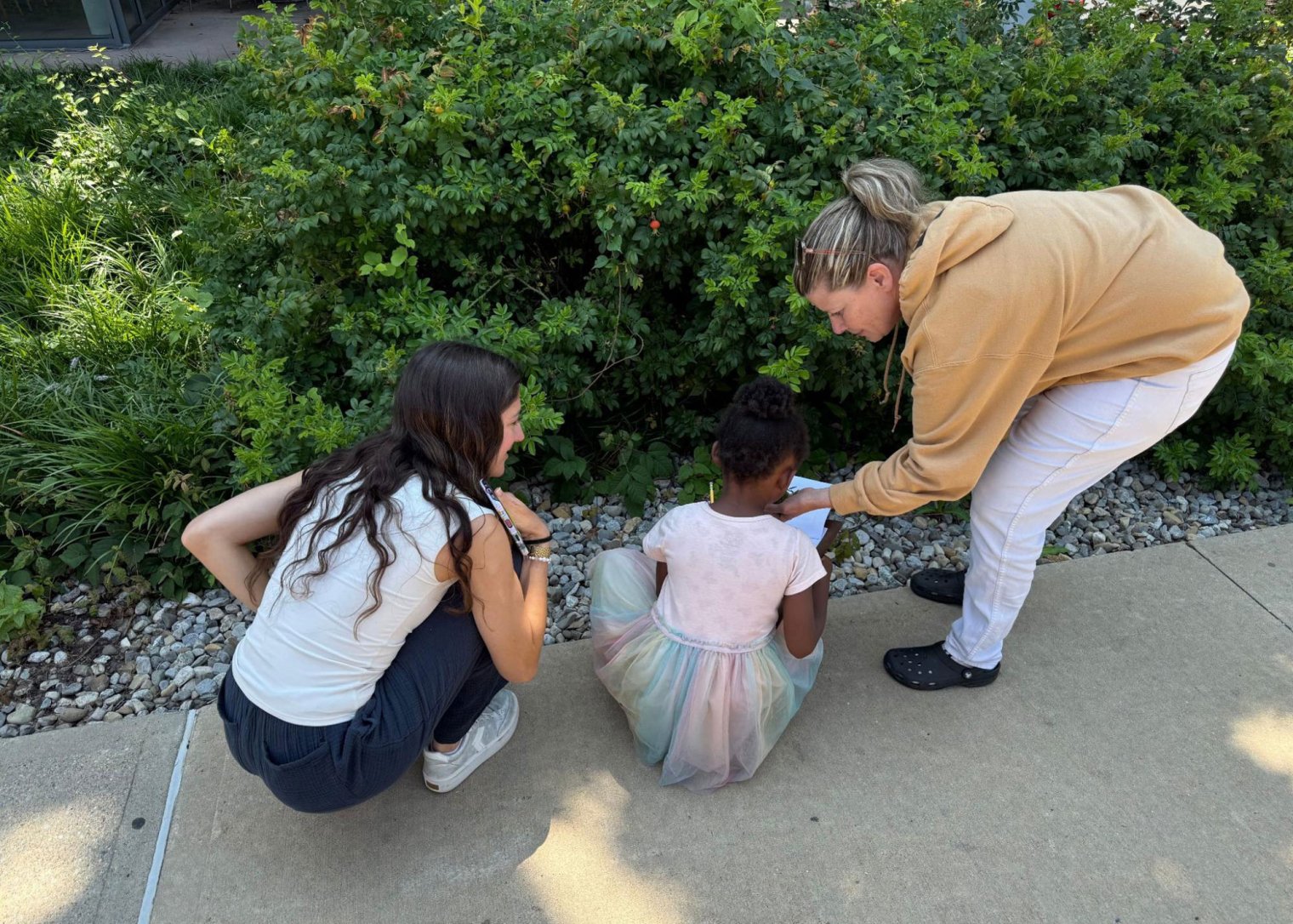
The final day moved beyond talking about teaching. Teams taught the lessons they had developed to children participating in the Montclair State University epiSTEMic program. Teachers had to listen to children’s ideas, respond to unexpected questions, adjust their plans, and decide when to guide and when to let exploration lead.
What Changed?
The academy’s outcomes were measured through matched pre- and post-program surveys, daily reflections, lesson materials, digital nature journals, and participant accounts of what they learned.
Among the 19 participants with matched pre- and post-program surveys, average overall confidence teaching elementary science increased from 2.79 to 4.00 on a five-point scale. Participants also reported statistically significant gains in science teaching identity, using mathematics and data in science, engineering and design, collaboration and agency, and readiness to implement EcoExplorers approaches.
I hoped to gain more confidence in connecting science instruction to the world around my classroom. I am now more confident in bridging the gap between the classroom and the outdoors, and I look forward to implementing it!
— Ms. Meaghan Healy, Grade 4 teacher, Fair Lawn School District
The largest program-aligned gain was in implementation readiness. Participants became substantially more confident teaching outdoors, helping students collect and interpret environmental data, teaching local ecosystems and sustainability, adapting outdoor activities to their own schools, and implementing an EcoExplorers lesson during the coming school year.
The numbers tell an important part of the story. The participants’ own words explain what that change felt like.
Before starting this program, science was not a subject I enjoyed teaching at my school. After this week and seeing what science could look and be like in my classroom, I found an appreciation and importance for teaching science in my classroom.
— Ms. Giuliana Coccia, Grade 3 teacher, Montvale Public Schools
Confidence Did Not Mean Having Every Answer
One of the most meaningful changes was a new understanding of what it means to be confident in science. Before the academy, several teachers worried that children might ask questions they could not answer. By the end, participants were describing something different: confidence as the ability to observe with students, ask productive questions, gather evidence, and figure things out together.
I don’t know the answer to everything about what the students are going to ask. I no longer feel this concern because we can explore and try to figure out an answer together.
— Ms. Giuliana Coccia, Grade 3 teacher, Montvale Public Schools
That shift is important because children’s questions do not always follow a script, and the most memorable science learning can begin outside of carefully constructed lesson plans. This is how some of the most important scientific discoveries happen!
The Critical Importance of Programs Like EcoExplorers
Elementary school is where many children first decide whether science feels like something they can understand, enjoy, and do. Yet elementary teachers often face limited instructional time, crowded curricula, uneven access to materials, and little opportunity to practice science teaching with supportive colleagues.
EcoExplorers addresses those challenges by investing in teachers. When a teacher learns that a patch of grass can become a biodiversity study, a bird feeder can become a source of data, or a child’s unexpected question can become the center of an investigation, the impact does not end with one summer program. It continues in every classroom where that teacher creates more room for curiosity.
I absolutely LOVED my experience here and am grateful for the opportunity. The activities, the time spent with colleagues and the facilitators all enriched my learning in many ways.
— Ms. Jessica Murin, Grade 5 teacher, Pequannock Township School District
The Work Continues
Participants left EcoExplorers with classroom-ready lessons, shared digital resources, new professional relationships, and a commitment to implement at least one lesson during the 2026-2027 school year. PRISM will continue to learn from their experiences as teachers adapt the work to different grades, communities, schedules, and school environments.
The program also strengthened a wider teacher-learning ecosystem. EcoExplorers connected K-5 professional learning, the CSAM Science Teaching Program, and mentor-teacher leadership through PRISM. In doing so, it created a space where current and future educators could learn not only new activities, but a shared way of approaching science: begin nearby, look closely, welcome questions, and build understanding together.
This has helped me better understand my responsibility as a teacher, a learner, and a human in spreading the word of science and taking initiative!
— Ms. Meaghan Healy, Grade 4 teacher, Fair Lawn School District
EcoExplorers began with a simple invitation to notice more. Its significance lies in what happens next: more teachers willing to explore, more children invited to see themselves as scientists, and more classrooms where the world just outside the door becomes a laboratory for exploration and discovery.
- Published
- Author
- Scott Kight
- Type
- Topic
- School or College
More News & Stories
-

-

-
Student Success Stories