
Adoption Studies Project
Adoption is a topic that offers a unique window into issues of trauma, identity, belonging, mental health, and creativity with its inherent challenge of norms since it often connects different social backgrounds, if not distant cultures in the case of international adoptions, and provides – albeit in complicated forms – a place in lieu of abandonment and loss. Essentially, adoption is thus an act of translation.
While often romanticized as part of a rescue rhetoric, adoption is also at the center of debates about the legitimacy of uprooting, as well as about the exploitation, marginalization, and crime that it directly and indirectly produces in the countries or social milieus of origin. International adoption is also an entry point into the history of struggling countries and the privileges of the so-called developed economies in a system of blatant inequalities of which adopted children are the most symptomatic manifestation. Yet, adoption is also a fruitful realm of creativity for authors and artists precisely because it prompts them to explore the tension between choice, chance, and circumstance in the encounter with the other; the conflict between and co-existence of nature and nurture; the impact of trauma (political events, natural disasters, and personal tragedies) in displacing and uniting people; and the fundamental need for telling one’s story, which adoption naturally … fosters.
The Adoption Studies Project explores all these clashing but also co-existing topics from a global cultural perspective in the belief that the humanities represent a key field to approach a topic normally relegated to psychology or sociology and the adoption experience is both universal and unique to specific locales around the world. The social sciences, as well as medicine, play an important role but it is the cultural production that sheds light on issues that while pertaining to the experience of adoption are ultimately human: the meaning of birth, the power of relations, the quest for the self, the management of rooted pain, the impact of standardized notions of a family, etc. I am interested in focusing on the Italian case as much as the vast context of transnational adoption that reflects global dynamics. So far, the project has entailed teaching, translation, book presentations, conference papers, cultural events, etc. Below is a list of the specific aspects of this ongoing project, which will include additional ones over time on a regular basis.
Teaching
“Narrating Adoption: Choice, Chance and Circumstance” – a class taught for the Honors Program in Fall 2023, offered in 2025 as “The Meanings of Adoption”
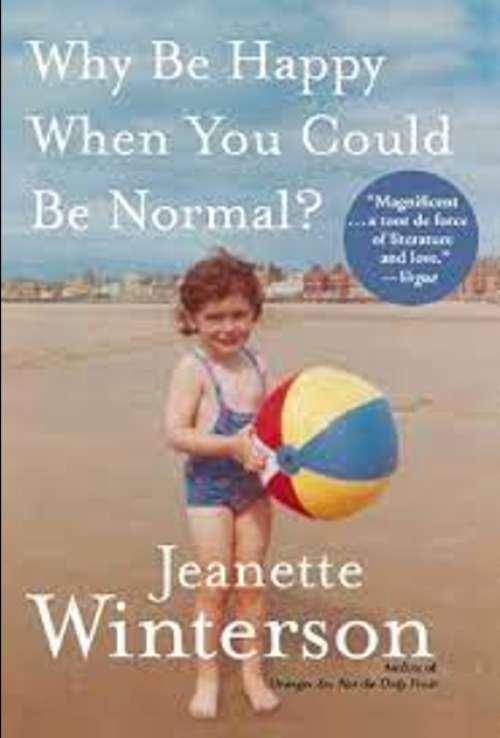
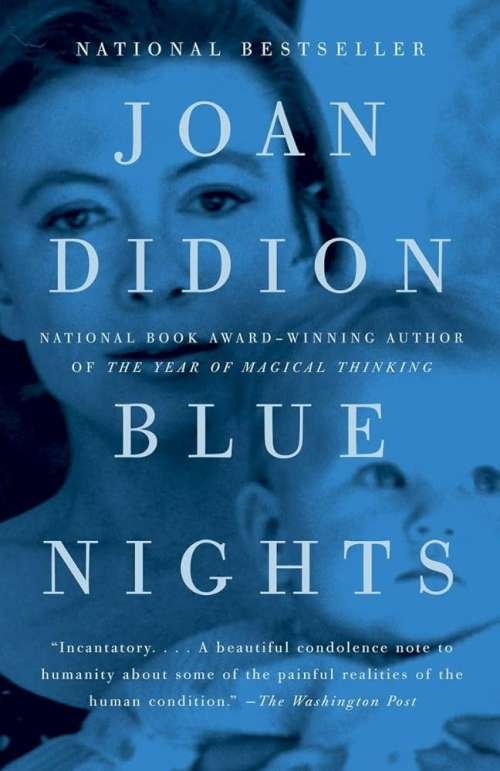
This course examines adoption’s primary association with various forms of family (fostering, kinship adoption, long-term mentoring) but also broadens the meaning of the term to encompass the adoption of a language for a writer, of a country for an immigrant, and a muse for an artist. It addresses adoption in its different meanings in a variety of geographical areas (Italy, South Korea, the U.S., the U.K., Spain, Peru, Afghanistan, India, Switzerland, Belgium) and historical periods (from the post-WWII period to the contemporary era), through novels (Pinocchio), graphic novels, films (Secrets and Lies and Return to Seoul), animated films (My Life as a Zucchini), newspaper articles, memoirs (Why Be Happy When You Could be Normal? by Jeanette Winterson and Blue Nights by Joan Didion), essays (In other words by Jhumpa Lahiri) and art pieces (Vanessa Beecroft’s photos). The course uses critical essays from two milestone anthologies: The Routledge Critical Adoption Studies Reader and The Routledge Handbook of Adoption, both providing a multi-faceted interdisciplinary take on adoption.
Research
Translation
- Farewell to Russia Memories of When I Was Kola Dasvidania by Nikolai Prestia (originally titled Dasvidania, Venice: Marsilio, 2021). Co-translated by Teresa Fiore and Daniela Chaudhary Fiore. New Brunswick, NJ: OVOI series, Rutgers University Press, March 2026.
Invited Talk
- “Adoption as a an Act of Translation in the Autobiographical Works of Jeanette Winterson and Nikolai Prestia.” Talk given to a graduate class on translation taught by Prof. Manuela D’Amore (English Literature), followed by a short translation workshop using excerpts from Winterson’s book “Why Be Happy When You Could Be Normal?”
Conference papers
- “Translating a Novel about Adoption, Dasvidania, with My Adopted Daughter.” OVOI (Rutger UP) panel. AATI Annual Conference, Catania, Italy. July 2023.
- “Re-reading Race and Class in Italy through Recent Novels about Adoption.” AATI Annual Conference, Catania, Italy. July 2023.
- “Longing for Identity, Belonging Through/To Words: Stories of Adoption in Contemporary
Italian Literature.” ACAS (Alliance for the Study of Adoption and Culture Biennial Conference), Brown University. April 2024.
Cultural Events
From a Russian Orphanage to a Sicilian Adoptive Family: Dasvidania (2021), a novel by Nikolai Prestia (Zoom, May 2022)
Presentation of Dasvidania by Nikolai Prestia in Italy. (Agrigento. Aug. 2024).
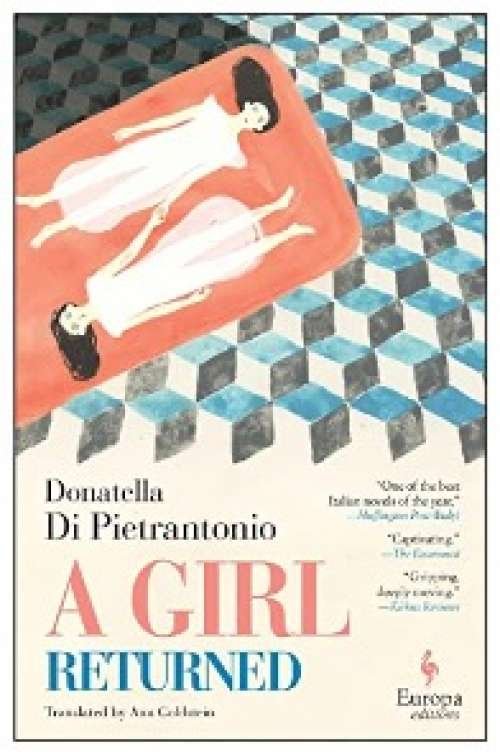
A Girl Returned: Film Screening and Q&A with Director Giuseppe Bonito (Montclair State University, Thur. Oct. 5, 2023)
Ciudad de los Niños (Bolivia-Italy): Documentary Screening and Discussion about Foster Care, Education, and Migration (Montclair State University, April 17, 2023)