
Memoria Presente: Literature and Film
The body of literature and film reflecting the cultural ties between Italy and Spain/Latin America is extremely vast and complex. This section covers works produced in different places and at different historical moments to try to capture this variety and illustrate the multifarious forms of contact and exchange across geographies and cultures.
Juan Rodolfo Wilcock
Juan Rodolfo Wilcock (Buenos Aires 17 April 1919- Lubriano 16 March 1978) graduated as a civil engineer, a career he was not interested in pursuing and became a writer, poet, critic, and translator. His first poetry collection Libro de poemas y canciones was published in Argentina in 1940. In those years, he became close with some of the most important Argentine intellectuals: Jorge Luis Borges, Adolfo Bioy Casares, and Silvina Ocampo. During this first part of his literary career, Wilcock began translating for the magazine Sur, founded by Victoria Ocampo in 1931. In 1957, he moved to Italy and abandoned Spanish to write in Italian. Therefore, we can consider him both an Argentinian and an Italian writer.
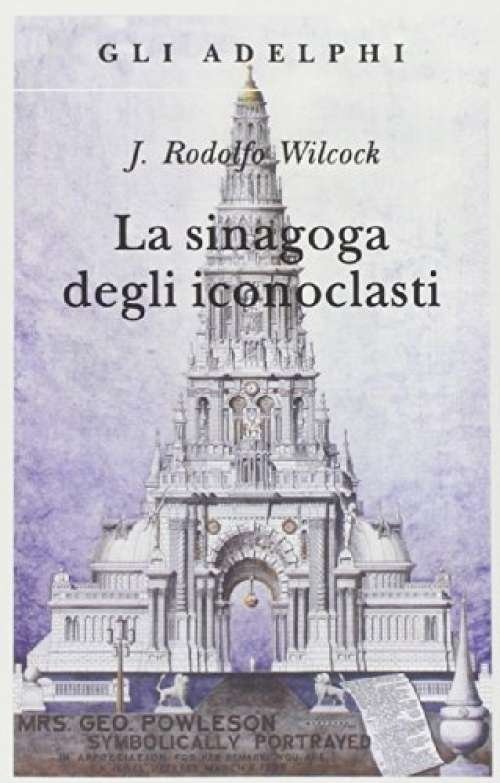
Once in Italy, he was in contact with intellectuals such as Pier Paolo Pasolini, Elsa Morante, and Ennio Flaiano. He started translating his previous poetic works and began writing novels, short stories, poems, and theatrical texts in the Italian language. His narrative production includes Il caos (1960), Fatti inquietanti (1961), La sinagoga degli iconoclasti(1972),L’ingegnere (1975), Il libro dei mostri (1978), Le nozze di Hitler e Maria Antonietta all’Inferno (1985). Characterized by his unique takes on the bizarre and the grotesque, these works escape categorization. As a writer accustomed to moving between languages and drawn to Ludwig Wittgenstein’s philosophy, Wilcock developed deep attention toward the power of language. So far, his works have been translated into English, Spanish, French, Portuguese, German, Check, and Albanese.
La sinagoga degli iconoclasti – the only book of his available in English translation – is representative of the genre of imaginary biographies. Several studies highlight the continuity of this text with Marcel Schwob’s Vies imaginaires (1896) and Jorge Luis Borges’s Historia universal de la infamia (1935), and Alfonso Reyes’s Espanoles de tres mundos. Viejo Mundo, Nuevo Mundo, Otro Mundo (Caricatura lirica) (1942). In addition, Wilcock modeled his text on Fads and Fallacies in the Name of Science (1957) by Martin Gardner, an American mathematics and science writer with interests also encompassing scientific skepticism, philosophy, religion, and literature. In reading these biographies one should keep in mind that Wilcock’s aim is to present the absurdity of the characters’ theories. To obtain this effect, he adopts a specific narrative tool consisting of the quasi-abolishment of the narrator’s voice. In doing so, he uses black humor to offer a peculiar perspective to show the ease of spreading an idea if it is supported through manipulation of the language.
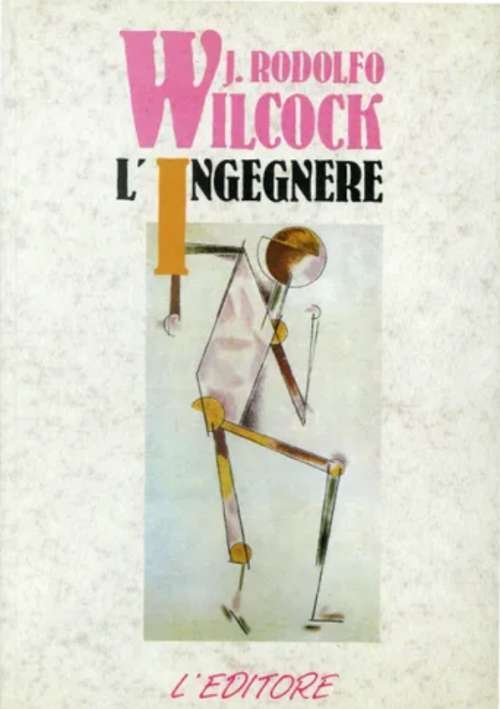
The book L’ingegnere – set in Argentina and written in Italian – represents an example of transnational novel. Published in Italy in 1975, it is considered a minor work by Wilcock, and has not been the focus of scholarly work so far. It is an epistolary novel that includes some autobiographical aspects. The protagonist is an engineer (like Wilcock) who works for a railroad construction project in Mendoza. Being away from Buenos Aires, he begins to send letters to his grandmother, who lives in the Argentinian capital. One should note that these letters contain several disturbing elements related to the protagonist’s cannibalism, such as descriptions of his teeth. However, cannibalism is never openly declared. Therefore, the text requires the reader’s intervention to fill the “gaps”.
Moreover, the protagonist uses erotic language directed at the figure of the grandmother. With regard to the erotic sphere of this text, scholar Adriana Mancini proposes an interpretation based on Roland Barthes’s reading of Sade, where the theorist affirms that the transgression of family taboo is expressed through the transgression of language (Mancini, 2004: 87-97). In addition, the cannibal moves from place to place to cover his real nature, and there is no limit to this movement. The book itself is deterritorialized for it is written in Italian within an Argentinian context: the engineer escaping as a consequence of his violations mirrors the author, who travels and establishes himself in Italy, by maintaining the impossibility of defining his authorial figure. His real provocation lies in the use of language. Thus, there is no real incestuous relationship with the grandmother, who seems to take on the role of language (translation and adaptation of an excerpt from Natascia Cappa’s article on Wilcock and Beckett. “Samuel Beckett y Juan Rodolfo Wilcock: entre traducción y literatura menor.” Beckettiana15 (2016): 7-19).
Film
Films about the relationships between Italian and Spanish/Latin-American cultures span different genres and cover a wide variety of topics. Documentaries are an ideal source to connect students to historical moments and the people involved, as well as being exposed to real-life locations, and in some cases archival footage.
Background Resources
(History, literary overviews, critical readings)
- Blengino, Vanni. “Nella letteratura argentina” in Bevilacqua, Piero, Andreina De Clementi, and Emilio Franzina, eds. Storia dell’emigrazione italiana: Arrivi. Rome: Donzelli, 2002. 641–60. Print.
- Devoto, Fernando. “In Argentina.” in Bevilacqua, Piero, Andreina De Clementi, and Emilio Franzina, eds. Storia dell’emigrazione italiana: Arrivi. Rome: Donzelli, 2002. 25–54. Print.
- Fiore, Teresa. “Displaced Italies and Immigrant ‘Delinquent’ Spaces in Pariani’s Argentinian Conventillos and Lakhous’s Roman Palazzo.” Pre-Occupied Spaces: Remapping Italy’s Transnational Migrations and Colonial Legacies. New York: Fordham UP, 2017. 83-103. Print.
The first part of the essay analyzes Laura Pariani’s innovative detective novel Dio non ama i bambini (2007, see details in the specific entry in this bibliography), set early 1900s Buenos Aires, Argentina. Set in the tenement houses the immigrants inhabited (conventillos), and written in a unique hybrid language blending Italian, dialect, and Spanish, the novel is an ideal text to learn about Italian immigration in Argentina at the time of anarchism and anti-immigrant sentiment via the analysis of urban space and gender/class/generational conflict. - Villalobos, Mary. “Tras el rastro de Gabo en Roma.” El Espectador. April 19, 2014. Online article (in Spanish).
A detailed recap of Marques’s adventures in Romes between Vesta rides and major cases, such Maria Montesi’s. - Further resources on Juan Rodolfo Wilcock (see also bibliographies inside the individual essays):
- Special Quodlibet volume on his works (collection of essays in Italian): L’eternità immutabile. Studi su Juan Rodolfo Wilcock. Ed. by Roberto Deidier e Giorgio Nisini. Macerata, Italy: 2020.
- Natascia Cappa’s article on Wilcock and Beckett. “Samuel Beckett y Juan Rodolfo Wilcock: entre traducción y literatura menor.” Beckettiana15 (2016): 7-19.

This page was created as part of an NEH (National Endowment for the Humanities) grant, and with the logistical support of Montclair State University. For information about the NEH Faculty Award linked to the Memoria Presente project, see link.