
Projects in the Caribbean
In the Caribbean, CHAS faculty have been engaged in a long-term, multidisciplinary project that addresses human-land relations, ranging from the earliest known settlements, dating to ca. 6000 BCE, to early colonial occupations in the sixteenth and seventeenth centuries. This project has been structured within the theoretical framework of island historical ecology, explicitly viewing landscapes as the outcome of complex and changing socioenvironmental processes. In addition, we have been investigating the status of heritage consideration in the Caribbean in the face of current socioeconomic demands, the unique legislative environments of independent island nations and overseas possessions of developed countries, and the interests of competing stakeholders.
Public Archaeology, Indigenous Heritage, and Afro-Jamaican Identity at the White Marl Site, Central Village, Jamaica
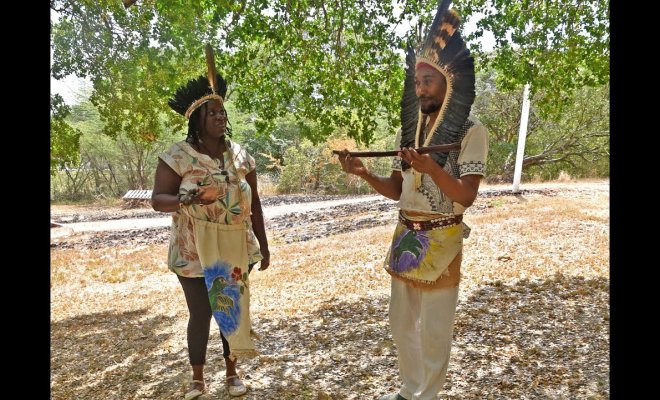
White Marl is the largest, most complexly organized precolonial site documented for Jamaica and it is increasingly at risk due to plans for highway improvements. The site is of fundamental importance to overlapping sets of stakeholders: local residents, descendant communities, professional and avocational archaeologists, and heritage managers. We consider concepts of memory and heritage, linking decades of archaeological research at White Marl to current conceptions of the place by Amerindian descendants of the first Taíno settlers and by residents of Central Village, the modern community surrounding the site. We review White Marl’s archaeological history and situate the site in its current social, cultural, political, and economic context of Central Village.
The complex stratigraphy of White Marl is mirrored by equally complex layers of archaeological interpretations of the site since the nineteenth century as well as views of this heritage resource by both local community members and descendants of the original Indigenous occupants. Continuities are explored between the Indigenous precolonial occupants of White Marl, current occupants of Central Village, and the Indigenous descendant community.
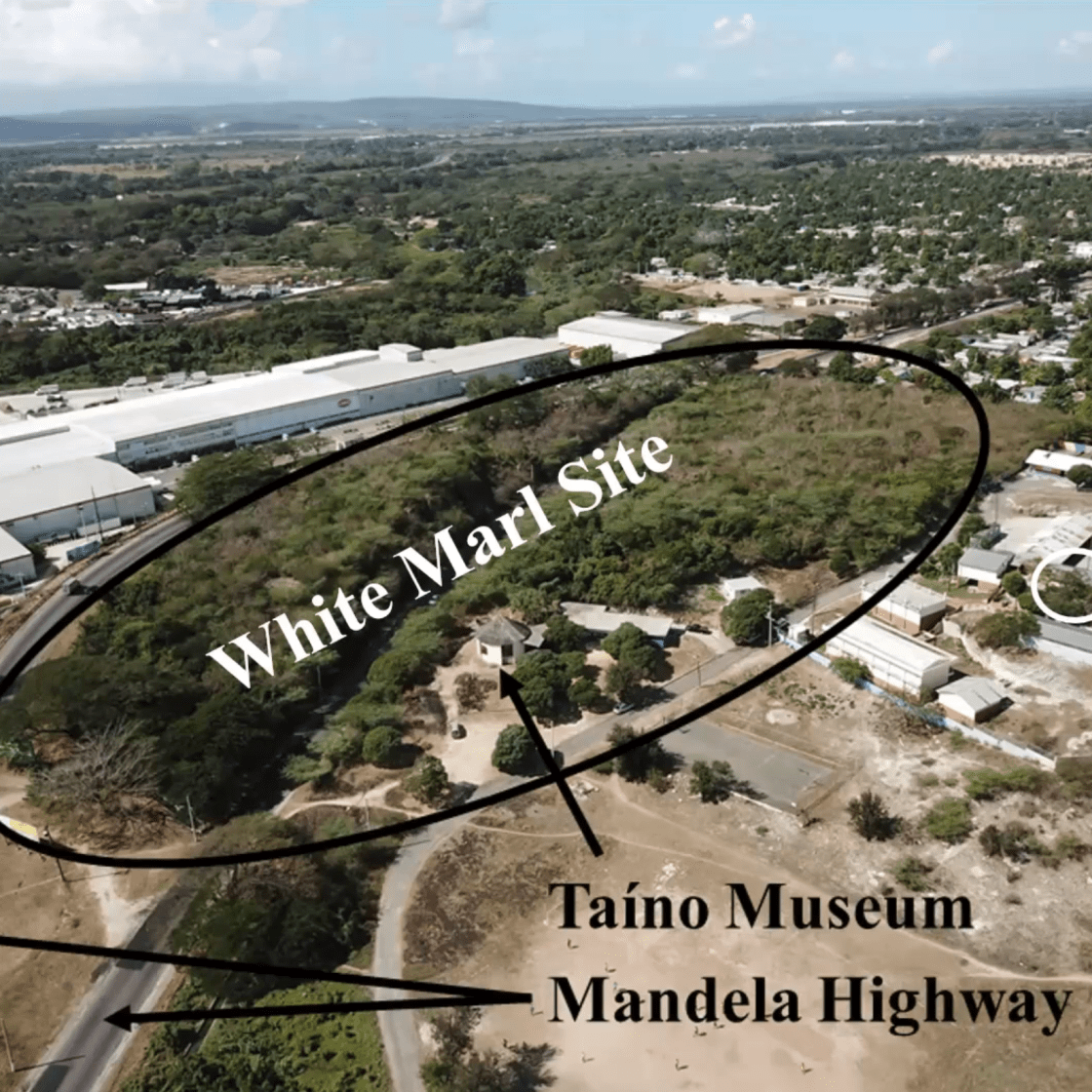
White Marl archaeological site
CHAS along with Montclair Anthropology and the Northern New Jersey Chapter of the Archaeological Institute of America held an event on Sept 18, 2024 to discuss the the significance of the White Marl archaeological site and how this heritage resource is important to local community members and descendants of the original Indigenous occupants. The future of White Marl is uncertain owing to proposed plans to widen a highway that bisects the site. Peter Siegel (Anthropology), Kasike Kalaan Nibonrix (Chief of the Jamaican Taínos), and Zachary Beier (Senior Archaeologist with Chronicle Heritage) addressed potential measures that could be taken to mitigate or minimize adverse effects to this crucially important heritage site.