Resident Fire Safety Information

Dorm-Fire-Safety_091625

Meet Your Campus Fire Safety Leaders


Robert Ferrara

Director of Fire Safety

Emaill: ferrarar@montclair.edu

John Keane

Asst. Director of Fire Safety

Email: keanej@montclair.edu

Michael Weisberg

Fire Safety Coordinator

Email: weisbergm@montclair.edu

Resident Student Fire Safety Information

Welcome Resident Students!

The Office of Fire Safety is responsible for all aspects of life safety throughout the University. Preventive activities include fire prevention training for University personnel, conducting fire and evacuation drills, testing of fire detection and protection equipment, providing educational programs, evaluating materials, and establishing guidelines for fire-safe materials.

In each residence hall, there are several life safety systems in place to make sure our students are as safe as they can be. Please review the following list and note the importance of each system.

We look forward to working with you throughout your college experience here at Montclair State University.

Fire Safety Thumbnail

Fire Safety Tips for Resident Students

Watch quick fire safety tips and real-life scenarios to learn how to stay safe in residence halls.

Close Before You Doze Thumbnail

Close Before You Doze

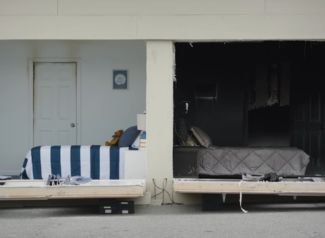
Learn how simply closing your door before sleeping can help slow the spread of fire and smoke and potentially save your life.

Mara Gibbs Thumbnail

College Life & Fire Safety: The Mara Gibbs Story

Watch the powerful story of Reed College student Mara Gibbs and learn the importance of campus fire safety.

Fire Safety Resources


Campus Fire Safety Right-to-Know Act

Montclair State University maintains a fire log that records, by the date that a fire was reported, any fire that occurred in an on-campus student housing facility. The log includes the nature, date, time, and general location of each fire. The University makes an entry to the log within two business days of the receipt of such information. The fire log for the most recent 60–day period is made available for public inspection during normal business hours in the Office of Fire Safety. Portions of the log older than 60 days are made available within two business days of a request for public inspection.

A summary of the University’s annual report of the fires recorded in the fire log is set forth below. The Housing Fire Statistics are updated October 1 of each year.

Fire Safety Systems in Student Housing

All student housing structures contain fire alarms that report to the University Police Headquarters by way of a state-of-the-art Notifier Monitoring System. The hardware for the Notifier Monitoring System was last upgraded in 2016.

All on-campus Student Housing facilities are equipped with a full NFPA 13 fire suppression system installed throughout each building. Sprinkler testing is conducted quarterly by a State Certified Contractor and University Fire Safety employee.

A description of each on-campus student housing facility and its corresponding fire safety system with an indication of the most recent improvements.

The fire alarm system was upgraded in 2013 to a Voice Activation System and room detectors were upgraded in 2015 from 110v smoke detectors, to wireless monitored device that now report to University Police.

The fire alarm was last upgraded in 2016 to a Voice Activation System with addressable room detectors that report to University Police.

The fire alarm was last upgraded in 2014 to an addressable fire alarms system that reports all alarms to University Police.

The fire alarm was last upgraded to an addressable fire alarms system that reports all alarms to University Police.

This facility was constructed in 2014 to include a Voice Activation System with addressable fire alarm systems that report all alarms to University Police.

This facility was constructed in 2011 to include a Voice Activation System with addressable room detectors that report to University Police.

This facility was constructed in 2011 to include a Voice Activation System with addressable room detectors that report to University Police.

In 2024, the fire alarm system at 100 Clove Road was upgraded to a fully addressable notifier system.

In 2020, the fire alarm system at 300 Hawk Crossings was updated to a fully addressable fire alarm system that reports to University Police.

The fire alarm is a fully addressable smoke detection system that reports to University Police.

Plans for Future Life Safety Improvements

A description of future plans for fire safety improvements to each on-campus student housing facility.

Upgrade main fire alarm panels in this building to a Voice Evacuation Mass Notification system.

Upgrade main fire alarm panels in this building to a Voice Evacuation Mass Notification system.

Upgrade each of the main fire alarm systems beginning in 2020.
Replace the wireless system installed in 2015 with a fully addressable Notifier System with Intelliquad carbon monoxide sensor detectors. One out of three residence halls are presently complete.

On-Campus Student Housing Fire Statistics

2024 

Montclair State University       Residence HallTotal Fires in Each BuildingDateCause of FireNumber of Injuries that Required Medical Treatment in a Medical FacilityNumber of Deaths Related to FireValue of Property Damaged by Fire
Alice Paul Hall15/24/2024Cooking- Confined to OvenN/AN/A$0.00-$99.00
Barton Hall0N/AN/AN/AN/AN/A
Basilone Hall0N/AN/AN/AN/AN/A
Blanton Hall0N/AN/AN/AN/AN/A
Bohn Hall0N/AN/AN/AN/AN/A
Count Basie Hall0N/AN/AN/AN/AN/A
Einstein Hall0N/AN/AN/AN/AN/A
Freeman Hall0N/AN/AN/AN/AN/A
Gibson Hall0N/AN/AN/AN/AN/A
Gordon Hall0N/AN/AN/AN/AN/A
Hawk Crossings, Accipiter0N/AN/AN/AN/AN/A
Hawk Crossings, Buteo0N/AN/AN/AN/AN/A
Hawk Crossings, Falco0N/AN/AN/AN/AN/A
Millicent Fenwick Hall0N/AN/AN/AN/AN/A
Mills Hall0N/AN/AN/AN/AN/A
Parker Hall0N/AN/AN/AN/AN/A
Russ Hall0N/AN/AN/AN/AN/A
Stone Hall0N/AN/AN/AN/AN/A
Whitman Hall0N/AN/AN/AN/AN/A
William Carlos Williams Hall0N/AN/AN/AN/AN/A
Bloomfield College At Montclair State University Residence HallTotal Fires in Each BuildingDateCause of FireNumber of Injuries that Required Medical Treatment in a Medical FacilityNumber of Deaths Related to FireValue of Property Damaged by Fire
Clee Hall0N/AN/AN/AN/AN/A
Franklin Hall0N/AN/AN/AN/AN/A
Schweitzer Hall0N/AN/AN/AN/AN/A
19 Austin Place0N/AN/AN/AN/AN/A
21 Austin Place0N/AN/AN/AN/AN/A
23 Austin Place0N/AN/AN/AN/AN/A
25 Austin Place0N/AN/AN/AN/AN/A
61 Fremont Street0N/AN/AN/AN/AN/A
61 Oakland Ave0N/AN/AN/AN/AN/A
58 Spruce Street0N/AN/AN/AN/AN/A
60 Spruce Street0N/AN/AN/AN/AN/A
225 Liberty Street0N/AN/AN/AN/AN/A
23 Park Place0N/AN/AN/AN/AN/A

Student and Resident Fire Safety Information
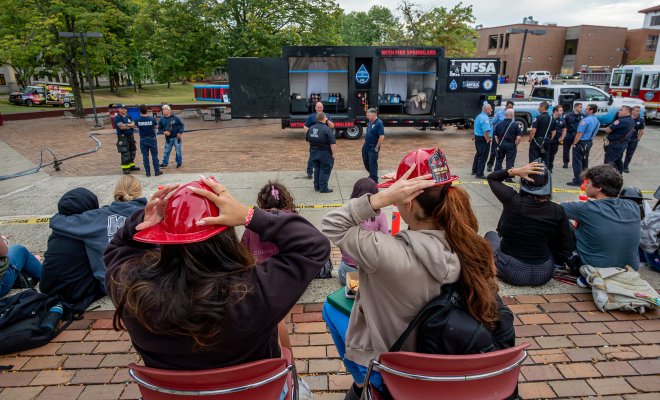
Sprinkler systems suppress fires and keep them from spreading. According to the Center for Campus Fire Safety, “Automatic fire sprinklers are one of the most effective methods of controlling a fire and protecting the occupants of the building from the smoke and fire.”

Located throughout the entire campus community, exit and emergency lights are a vital aspect of life safety. Exit signs point the way to safety and emergency lights allow individuals to see where they are going when the electricity fails.

Overall, the above preventative measures help save lives. However, maintaining a safe campus requires the cooperation of the entire University community; therefore, the University has established strict fire safety guidelines that all members of the campus community must follow.

In the event of a fire alarm, do the following things:

  1. Leave the building immediately–use the stairwells, not the elevator.
  2. If you are a mobility-impaired person on an upper floor, proceed to the stairwell landing on your floor and instruct someone to notify emergency response personnel of your location.
  3. NO personnel will be allowed to re-enter the building without permission of Montclair State University Campus Police or the Local Fire Department.

In the event of a fire, do the following things:

Assist any person in immediate danger to safety, if it can be accomplished without risk to yourself.

Immediately activate the building fire alarm system. This will sound the fire alarm bells or horns to evacuate the building and will automatically notify the Campus Police and Local Fire Departments. It is best to have these agencies respond and not be needed than it is to have them arrive too late for a potential rescue.

If the fire is small enough, use a nearby fire extinguisher to control and extinguish the fire. Don’t fight the fire if these conditions exist:

  • The fire is too large or out-of-control.
  • If the atmosphere is toxic.
  • If the first attempts to put out the fire do not succeed, evacuate the building immediately.
  • Doors and, if possible, windows should be closed as the last person leaves a room or area of a lab.
  • Do not use elevators–use building stairwells.

When they hear the fire alarm sound, all personnel in the affected areas shall evacuate the building immediately.
Upon evacuating the building, personnel shall proceed to the designated meeting area (at least 150 feet from the affected building) where the supervisors are responsible for taking a head count and accounting for all personnel.

NO personnel will be allowed to re-enter the building without permission of Montclair State University Campus Police or the Local Fire Department.

You must report all fires to of Montclair State University Campus Police.

All large fires will be investigated by NJ State Fire Marshal.

A minimum of two fire drills are conducted in all residence halls per year. An announced drill is held early in the Fall semester and an unannounced drill is held during the Spring semester.

Smoking and/or vaping in residence halls is expressly prohibited at all times.

Prohibited Appliances/Items:

  • Hot Plates/hot pots and any appliance with exposed heating elements.
  • George Foreman Grills (Permitted only in The Village and Hawk Crossings, one per apartment.)
  • Electric Heaters or Space Heaters
  • Halogen, Torchier, or Lava Lamps
  • Coffee Pots (One permitted, only with automatic shut off features.)
  • Toasters (One Permitted only in the Village apartments and Hawk Crossings)
  • Electric Frying Pans
  • Popcorn Poppers (One permitted only in the Village and Hawk Crossings)
  • Potpourri Pots
  • Candlewax Warmers (BOTH ELECTRIC AND NON ELECTRIC ARE PROHIBITED!)
  • Dishwashers (Except in the Village and Hawk Crossings, where they are provided by the University.)
  • Window/Portable Air Conditioners
  • Stoves
  • Burners/Grills
  • Deep Fryers
  • Open Coil Plates
  • Rice Cookers (Only Permitted in the Village)
  • All smoking materials (Including Hookahs, Vape Pens, and Tobacco Products)
  • Non-approved Lighting (Neon lights and signs, halogen lamps, lava lamps, torchiere lamps, plastic multi-headed octopus lamps)
  • Personal Electric Vehicles (Hover Boards, e-bikes, e-scooters, etc.) are not to be stored in residence halls or any University building.  Please refer to “Campus Guidelines for Personal Electric Vehicle Operation” (3/21/23) for reference. 

Holiday Decorations Including:

  • Live Christmas Trees and/or Wreaths
  • Halloween/Fall corn stalks or hay bails

Combustible Items Including:

  • Candles, incense, oil burners, and candle wax warmers are STRICTLY PROHIBITED  in all residence areas. Even if they are only decorative, in accordance with the State of New Jersey, Division of Fire Safety.
  • Explosives, Fireworks, M80’s, bottle rockets, etc.
  • Any and All Firearms, ammunition, BB Guns, Paintball Guns, knives or weapons of any type, even if they are presumed to be exclusively for decorative or collectible purposes.
  • Gasoline and/or any type of gasoline powered items such as mopeds, motor scooter, motorcycles, portable generators, etc.
  • Kerosene, Propane, Paint Thinner, Oil Lamps.
  • All Flammable and combustible liquids.
  • Kerosene Heaters.
  • Additional Unapproved Furniture other than what is provided in the rooms, i.e. futons, chairs, mattresses, bed frames, desks, beanbag chairs, couches, etc.

Restricted Items:

  • Microwave Ovens –  One microwave is permitted in each student room. The microwave must not exceed 700 watts of power. Larger microwave ovens are permitted in the apartment communities, but must not exceed 1,000 watts of power.
  • Refrigerators –   One refrigerator is permitted in each student room. The refrigerator must not draw more than 1.5 amps and must not exceed 3 cubic feet. Mini-fridges are prohibited in the apartment communities since Montclair State provides a full refrigerator.
  • MicroFridge Units – One MicroFridge unit is permitted in each student room. (For MicroFridge information, contact Campus Specialties at www.mymicrofridge.com or call 1-800-525-7307.)
  • Power Strips –  Power strips with a built-in GFCI surge protector and circuit breaker are permitted and must be plugged directly into the wall outlet. Such power strips may not be connected one another or “daisy chained.”

Any and all electrical equipment brought into the residence halls by a resident must bear the Underwriters Laboratories (UL) seal of approval and must be used for the purpose for which it was designed. Items found not meeting these standards, or in violation of any other fire safety regulations, will be confiscated and returned at the end of the semester/academic year.

Please note that this compilation is not an exhaustive list of the violations for which you may be cited.  For additional information, please visit the Office of Residence Life.

Smoke and heat detectors are installed in every residential room. Whenever there is a dangerous presence of smoke or heat, the detectors send a signal to the fire alarm control panel which activates the fire alarm. This life safety system lets students know when to evacuate their room/building and ensures that they are quickly relocated to a safe area. 

The local fire departments (Montclair, Little Falls, and Clifton) respond to all fire alarms.

Sprinklers are an important part of the fire protection system in all University residence halls and many other campus buildings. All older residence halls have now been retrofitted with up-to-date fire alarms and sprinkler systems. Like fire alarms, these systems are checked on a regular basis. Their purpose is to suppress a fire and keep it from spreading. Water flowing in the system triggers the fire alarm. Please report any leaking sprinkler equipment to the Director of Fire Safety at 973-655-5401.

A popular activity in some buildings, “hall sports” (throwing objects like balls and Frisbees in hallways) can damage fire sprinkler system equipment. Designed to be sensitive to rising temperatures, sprinkler heads can be easily damaged when they are bumped. Likewise, hanging any objects or decorations from sprinkler heads and pipes can also cause damage.

Water from a sprinkler can leave oily stains on carpet and other furnishings. All repair costs due to negligence are charged to the department that sustained the damage. Residential Life is charged with any damage in residence halls–and will attempt to bill the person responsible in order to keep down costs.

Please Note: Failure to comply with the guidelines below will result in disciplinary action, which may entail removal from the residence halls.

  1. There is to be NO SMOKING in any residence hall. This includes hallways, bathrooms, common areas, and every inch of space in between.
  2. In the event of a fire alarm, STUDENTS MUST EVACUATE. Failure to evacuate can lead not only to disciplinary action, but to loss of life.
  3. Students MAY NOT TAMPER WITH ANY LIFE SAFETY SYSTEM. Deactivating fire alarms, tampering with exit signs and emergency lights, and touching sprinkler systems is strictly prohibited.
  4. CERTAIN ITEMS AND ACTIONS ARE NOT PERMITTED in the residence halls due to fire safety regulations. Please refer to Section J. of the Residence License and Dining Services Agreement for a complete list of prohibited and restricted items/actions. It is important that you read through the entire document carefully.

Hi everyone. I’m writing to tell you what happened at my dorm since some of you want to know the story.

It was 4:30 a.m. and I was about to go to sleep. My roommate Becky was already sleeping. The fire alarm went off so I tried to wake her up, although we never go out for them because we have so many fake ones. I had a feeling about this one because it was out of the blue. Also, we had a floor meeting a few days before and my RA said that they are gonna check every room to make sure everyone goes out. I had to fight with Becky to go outside. She said that she was gonna hide in the closet. Eventually, she got up, went to the bathroom and changed her clothes. When she was in the bathroom she looked outside to see if there were any people outside and she said that there weren’t so she wasn’t going. So I played mommy making sure that she had her coat, gloves, shoes and of course. cigarettes. Then I went to my friends’ room across the hall and banged on their door, thinking they were already outside because I knew they were awake. Right before I was about to go outside, they opened the door. They were pretending to be sleeping. Then I told them off and told them to hurry up because it was real. Then I went to the next door and did the same thing.

When we were in the hallway of my floor about to go downstairs, we started to see a lot of gray smoke. I thought it was just someone stupid who lit a smoke bomb. Then we walked down the stairs to the third floor (I live on the 4th) and it was all black, I was in shock. Just standing there, looking at it and breathing it in. That’s when Becky became my mommy. She yelled at me to cover my face and keep walking. The smoke was so heavy that I became light-headed. I couldn’t imagine actually being where the fire was, I probably would have passed out.

Finally, we got outside and walked around the front of the building. That’s when it was the most scary. There were a few girls hanging out of their window screaming for help with a huge cloud of black smoke behind them. Becky said “Let’s get out of here, whatever we see is gonna be bad”. There weren’t any fire trucks here yet so we didn’t know how long they would last. Finally one came and a huge crowd of people jumped in front of it pointing at the girls. They were gonna go to the other side of the building and they yelled for anyone to help and a bunch of guys ran to assist them. Eventually they go the girls out. Then we just stood outside for hours in the cold worrying if everyone was ok. While standing there we talked to a kid who jumped out of a third floor window. He was limping and his clothes were all ripped. Also kids who got out early enough ran across the street to some man’s house and woke him up and he brought over a ladder which saved dozens of kids.

I was home for a week wearing only the clothes on my back. I had no money, no license, no make-up, nothing. I went home wearing slippers. Ironically I had to bring everything to school because we are moving out of my house. Everything I owned was at school.

Now I just got back to school and things are very different. A lot of people moved out and the 3rd, 4th, and 5th floors north are in a hotel. It’s not ever gonna be the same. Luckily, none of my things are ruined. I actually think they cleaned up our room a little bit. I had beer in the room and it ended up hidden behind my bed and the window fan was out.

I just wanted to let you know to take the fire alarms seriously!!! Even if it is just a drill, on the news I heard about another alarm in another dorm on campus going off and some girl from Seton Hall said that the fire alarm went off and she looked out the window, saw no fire trucks so she went back to bed. Obviously, some people haven’t learned even when a real fire killed some people on her campus.

Thank you all for being so concerned. It means a lot. Feel free to forward this if anyone asks.

Lizzy

Residence Hall Holiday Decorating Guidelines
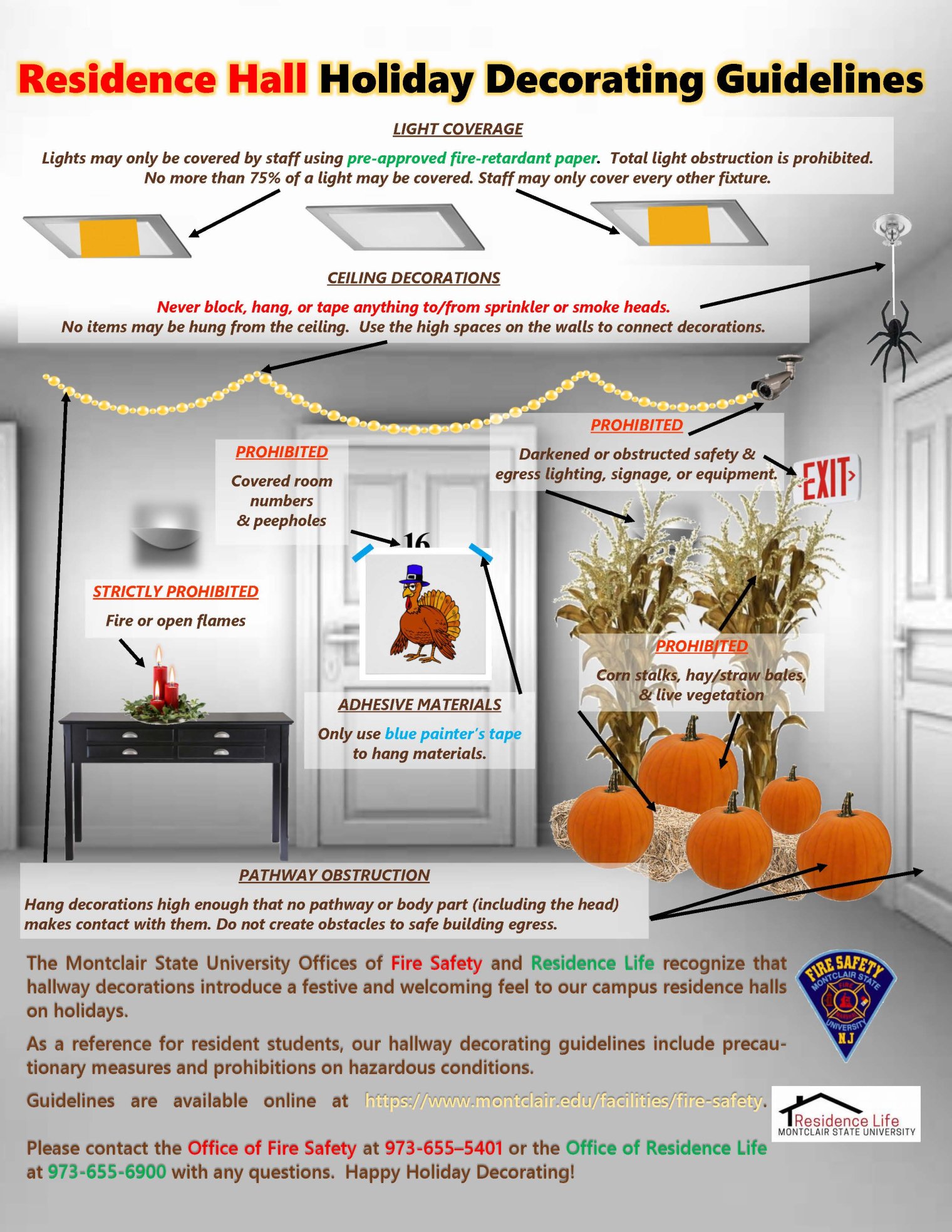
Holiday-Decorations_Residence-Halls_Fire-Safety

More Fire Safety Resources and Important Links

A false alarm is when a person intentionally sends in a false report of a fire. This causes emergency crews (Montclair Fire Department, Clifton Fire Department, Little Falls Fire Department and University Police) to expend time and effort in responding to a non-existing situation. False alarms kill. It has been documented by numerous fire agencies around the country that a number of fire departments responding to false alarms have been involved in accidents while responding to such reports, which resulted in firefighters being killed or injured, and vehicles and equipment damaged. Fire Department personnel may be delayed in responding to a real emergency where lives are at stake.

The fire detection systems in Montclair State University facilities are designed to respond to a condition of smoke and/or heat. How does a smoke detector work? When a foreign object or substance enters the inner chamber of a smoke detector, it activates the detector’s sensor, which sends a signal to the fire alarm control panel and sets off the fire alarm. However, a smoke detector cannot distinguish the differences in smoke, dust, insects, and water.
All fire alarm systems on campus are connected to a central receiving panel that is monitored 24 hours-a-day by the University Police Department. When a fire alarm goes off in a campus building, the dispatcher immediately knows in which building the alarm was activated. Each call is taken seriously and response is within a few minutes.

Fortunately, the cause of most fire alarms is not fire, but something else. Causes can be accidental (somebody bumping into a fire alarm device, a worker spray painting, sawing/sanding wood, or welding too close to a detector), unintentional (dust or insects the detector sees as smoke, or a smoke detector too close to a kitchen area, or water that leaks into a detector), mechanical (a malfunctioning system–usually when a new system is being installed, an electrical storm, or a faulty wire), or malicious (intentionally setting off the alarm).

The number of fire alarms on campus could be greatly reduced if we just pay more attention to our surroundings and what we are doing. Fire alarms disrupt campus life: classes, labs, special activities, office activity, sleep, etc. It is the goal of the Director of Fire Safety to reduce the number of fire alarms on campus through education, maintenance of alarm systems, and a smoke detector cleaning program.

There are over 2,500 fire extinguishers on campus. All fire extinguishers are tested once a year and are hydrostatically tested in accordance with the N.F.P.A 10. if you see a fire extinguisher with an old inspection tag please report the location to Fire Safety at X 5401.

Because we are a state agency, the State of NJ Division of Fire Safety inspects all campus property. Some buildings are inspected quarterly depending on their classification and use. Montclair State University Department of Fire Safety inspects the buildings throughout the year to ensure compliance with all State codes.

Testing of all life safety systems is done by an independent company to ensure compliance with all codes and standards. Copies of these reports are filed in the Fire Safety office.

Fire Drills are conducted four times a year in all residence halls. The first drill is scheduled within the first 10 days of the fall semester and all residents are told in advance. The other three drills are conducted during the spring and winter semesters with no advance warning. This brings a total of four drills per academic year with one of the drills being held after sunset.

Fire Drills were conducted at Montclair State University during Fall Semester 2024 on September 5, 2024 and November 6, 2024 (conducted after sunset). During Spring Semester 2024, drills were performed on January 23, 2024 and April 9, 2024.  Three additional Fire Drills were conducted on July 8, 2024, and July 15, 2024 for students residing on campus for summer programing in the Machuga Heights and Blanton Residence Halls.

Fire Drills were conducted at Bloomfield College of Montclair State University during Fall Semester 2024 on September 6, 2024 and November 25, 2024 (conducted after sunset).  During Spring Semester 2024, drills were performed on January 22, 2024 and April 17, 2024.

Inspections of all life safety devices are ongoing THROUGHOUT campus / all fire alarm systems are tested annually before the start of the fall semester. All fire alarms are monitored 24 hours a day at the University Police headquarters.

Sprinkler systems are tested annually during the summer months and inspected quarterly; all of the Resident Halls are fully sprinkled. Additionally, some of the academic buildings have sprinkler systems.

Cooking systems in all dining halls, diners, and classrooms are protected by hood suppression system. This is like a fire extinguisher that is hooked up to the hood above the stove. These systems are tested every six months.

Montclair State University has access to 24 hours-a-day, seven day a week response to any fire alarm or report of burning odors. Our duty is to assure the safety of everyone on the Montclair State University Campus.

However, fire alarms alone do not ensure any person’s safety unless that person knows how to safely exit a building when the fire alarm sounds.

Fire drills are conducted twice a year in all residence halls. The first drill is scheduled early in the fall semester and all residents are told in advance. The second drill is conducted sometime during the spring semester with no advance warning.

If residents do not evacuate a hall in a reasonable amount of time, the drill is repeated until emergency officials are satisfied with the evacuation time. All repeat drills are unannounced.

Fire drills are also conducted on a regular basis for the University Health Center and the Child Care Centers. Drills for other campus buildings are not conducted unless requested and scheduled by the building’s occupants.

When the fire alarm sounds, you should leave the building immediately–even if someone else tells you it is a false alarm. Do not use the elevator and do not assume it is an alarm test (unless a test has been announced)–fire alarms should never be taken lightly.

You may go back into the building when emergency personnel tell you it is safe to re-enter.

Montclair State University emergency personnel responds to any fire alarm (24 hours-a-day, 365 days-a-year) to assist the Fire Department with building and room entry. They can also provide information about a particular area due to their familiarity with the fire alarm system and practice of inspecting buildings. They help locate the alarm area for the Fire Department by checking and operating the fire alarm control panel. While trained in fire-fighting techniques, Montclair State University Emergency personnel do not fight fires unless the Fire Department asks for their assistance.

A. List of Prohibited Items

Items Not Permitted In Residence Rooms

Smoking and/or vaping in residence halls is expressly prohibited at all times.

Prohibited Appliances:

  • Hot plates/hot pots and any appliance with exposed heating elements.
  • George Foreman Grills (permitted only in The Village, one per apartment.)
  • Electric heaters
  • Halogen, torchier, or lava lamps
  • Coffee pots (One permitted, only with automatic shut off features.)
  • Toasters (One permitted only in the Village apartments
  • Electric frying pans
  • Popcorn poppers (one permitted only in the apartments.)
  • Potpourri pots
  • Candlewax warmers (BOTH ELECTRIC AND NON-ELECTRIC ARE PROHIBITED!)
  • Dishwashers (Except in the Village, where they are provided by the University)
  • Window/portable air conditioners
  • Stoves
  • Burners/grills
  • Deep fryers
  • Open coil plates
  • Rice cookers (Only permitted in the Village)

Holiday Decorations Including:

  • Live Christmas trees and/or wreaths
  • Halloween/Fall corn stalks or hay bales

Combustible Items Including:

  • Candles, incense, oil burners and candle wax warmers are STRICTLY PROHIBITED in all residence areas. Even if they are only decorative, in accordance with the State of New Jersey, Division of Fire Safety.
  • Explosives, fireworks, M80s, bottle rockets, etc.
  • Any and all firearms, ammunition, BB guns, paintball guns, knives or weapons of any type, even if they are presumed to be exclusively for decorative or collectible purposes.
  • Gasoline and/or any type of gasoline-powered items such as mopeds, motor scooter, motorcycles, portable generators, etc.
  • Kerosene, propane, paint thinner, oil lamps.
  • All flammable and combustible liquids.
  • Kerosene heaters.
  • Additional unapproved furniture other than what is provided in the rooms, i.e. futons, chairs, mattresses, bed frames, desks, beanbag chairs, couches, etc.

Restricted Items:

  • Microwave Ovens – One microwave is permitted in each student room. The microwave must not exceed 700 watts of power. Larger microwave ovens are permitted in the apartment communities, but must not exceed 1,000 watts of power.
  • Refrigerators – One refrigerator is permitted in each student room. The refrigerator must not draw more than 1.5 amps and must not exceed 3 cubic feet. Mini-fridges are prohibited in the apartment communities since the University provides a full refrigerator.
  • MicroFridge Units – One MicroFridge unit is permitted in each student room. (For MicroFridge information, contact Campus Specialties at www.campusspec.com or call 1-800-525-7307.)
  • Power strips – Power strips with a built-in GFCI surge protector and circuit breaker are permitted and must be plugged directly into the wall outlet. Such power strips may not be connected to one another or “daisy chained.”
  • Storage and charging of all personal electric vehicles (e-bikes, scooters, hoverboards, etc.) are prohibited in all campus buildings.

Any and all electrical equipment brought into the residence halls by a resident must bear the Underwriters Laboratories (UL) seal of approval and must be used for the purpose for which it was designed. Items found not meeting these standards, or in violation of any other fire safety regulations, will be confiscated and returned at the end of the semester/academic year.

Please note that this compilation is not an exhaustive list of the violations for which you may be cited. For additional information, please visit the Office of Residence Life.

B. Smoking Policy

Montclair State University is fully smoke-free, tobacco-free, and vapor-free. This complete ban applies to all students, faculty, staff, and visitors across all campus grounds.

Current state law and University policy prohibits smoking and/or use of tobacco, vapor or similar products* inside any campus building.

Any member of the campus community may ask an individual to comply with the provisions of this regulation or may file a complaint with University Police, who may issue a summons. 

Any individual who fails to comply is subject to a fine as determined by the local court where the summons is filed (typically ranging $25-$200).

C. Evacuation Procedures

All members of the Montclair State University Community are, by State law, required to review the Fire Evacuation Plan and to review the staging areas and building evacuation maps for the building in which the community members work, attend class, and/or reside; this information is available under Section XI, Staging and Accountability, of this fire evacuation plan. This is required to be done by all campus community members on an annual basis. 

D. Use of Space Heaters

During the winter months, some members of the University community feel that space heaters are needed to provide them with warmth. The use of space heaters should be avoided by contacting the Facilities Service Desk (973-655-5444) and requesting that Facilities increase the heat temperature in the respective space. This, however, may not be an option in areas such as the front desks of residence halls due to the constant flow of people into and out of the building. In these limited cases, the following space heater safety tips must be followed.

  • Keep all space heaters at least three feet away from any combustibles.
  • Use space heaters only as a supplementary source of heat. These devices are not intended to replace the building’s heating system.
  • Do not use extension cords with space heaters; plug them only into electrical outlets.
  • Inspect the heater’s cord periodically to look for frayed wire or damaged insulation.
  • Do not use a space heater with a damaged cord.
  • Check periodically for a secure plug/outlet fit. If the plug becomes very hot, stop using the space heater.
  • Heaters should be placed on a flat, level surface.
  • Do not place heaters on furniture since they may fall and become damaged or this could break parts in the heater, posing a fire hazard.
  • Do not place heaters on shelves or in cabinets, where they may fall or where heat may accumulate and cause damage or, worse yet, a fire.
  • Do not use in damp, wet areas.
  • Look for the UL mark on your electric heater. This means representative samples of the appliance have met UL’s stringent safety standards.

Anyone with questions about the use of space heaters should contact the Department of Fire Safety at 973-655-5401.

Center-For-Fire-Safety_Logo_2026

Center for Campus Fire Safety

Montclair State University is a proud member of CCFS, a non-profit organization comprised of more than 4,000 campus fire and life safety officials devoted to reducing the loss of life from fire on college campuses.  

Robert Ferrara, Director of Fire Safety, serves as a Director on the CCFS leadership team.

Center for Campus Fire Safety