
Fire Safety
The Office of Fire Safety ensures campus buildings meet fire and life safety codes through inspections, plan reviews, evacuation drills, equipment testing, and ongoing fire prevention training and education.
- Social Media
- firesafety@montclair.edu
- Phone
- 973-655-5401
- Location
- 150 Clove Road
Campus Guidelines for Personal Electric Vehicle Operation
Please Note: Electric Vehicles are strictly PROHIBITED inside ALL buildings (academic and non-academic) on both Montclair and Bloomfield Campuses.

General Policy Statement
This AFSR is created and published by the University in compliance with the Campus Fire Safety Right to Know Act and the Department of Education’s regulations codified at 34 C.F.R. 668.49. The AFSR is available on the University’s website at the University Facilities Fire Safety webpage and is updated annually. The AFSR is also distributed electronically to current and prospective students and employees no later than October 1st each year. Upon request, a paper copy of the report will be provided by contacting the Fire Safety Official by e-mailing FireSafety@montclair.edu.
The Campus Fire Safety Right-to-Know Act is also an amendment to the Higher Education Opportunity Act. This amendment serves to increase campus fire safety awareness across the nation, providing students and their families with the fire safety records of colleges/universities. Signed into law by President George W. Bush on August 14, 2008, this amendment requires post-secondary institutions to publicly display fire safety information and statistics, much as they already do with other safety statistics, such as campus theft and assault. This information provides prospective and current students of the policies, concerns, and fire safety conditions that are present at the institution in which they have applied or are enrolled.
Montclair State University has developed this AFSR with all the information required by law. Please take time to review our statistics and fire safety information. If you have any questions regarding fire safety, please contact us; staff is available daily at 973-655-5401 to answer any questions. Thank you for choosing Montclair State University and we look forward to helping you along your educational journey.
Reports and Resources
Fire Evacuation Plan - Montclair Campus
Training information:
Per the University’s Fire Evacuation Plan, all members of the University community are responsible for reviewing the fire evacuation plan. The Office of Fire Safety offers training to all Residents, Community Assistants, and various departments throughout campus. Fire Safety training for specific departments is always available through a request made by the unit supervisor.
The objective of this document is to provide the campus community access to a comprehensive emergency evacuation procedure for the evacuation of buildings with activated fire alarms, and, in doing so, to comply with the International Fire Code, as adopted by the State of New Jersey in effect as of February 2009.
This document is applicable to all persons on the campus of Montclair State University, including faculty, staff, students, and visitors.
1. Emergency Evacuation
- Become familiar with your work area and exit locations in advance of an emergency. Always know at least two ways out of a building.
- If a fire alarm sounds, prepare to evacuate immediately.
- Do not panic. Walk quickly to the closest emergency exit.
- Do not use elevators. If power is disrupted, elevators will stop working.
- Walk in a single file. Stay to the right when walking through corridors and stairwells.
- Avoid unnecessary talking and keep the lines moving.
- Individuals requiring assistance in an evacuation should proceed to a stairwell entrance area and wait for assistance.
- If smoke is encountered, drop to the floor and crawl along the wall to the nearest exit.
- When approaching a closed door, feel the door with the back of your hand. If the door is cool, carefully open the door and, if safe, proceed with the evacuation.
- No one is to return to the building until permission is granted by the local fire department or University Police.
2. Evacuation of Persons with Disabilities:
- Be aware that faculty, staff and students with disabilities may need individual assistance. Assist them whenever possible. A list of students with disabilities, which is updated each semester, is available for emergency responders in the event of an emergency. All faculty and staff with disabilities may contact the Department of Fire Safety at 973-655-5401 or ferrarar@montclair.edu with their work schedule if they would like to be placed on this list.
- If evacuation cannot be done safely, contact University Police at 973-655-5222 and provide them with your name, location (including floor and stairwell), the reason why you are unable to evacuate, and if immediate assistance is required. This information will be relayed to responding emergency personnel.
- Students with visual and physical disabilities (whether permanent or temporary) are permitted to await the arrival of emergency personnel at the stairwell landing from which they called. However, the student must contact the University Police Department, if opting to shelter in place.
- We advise students with permanent and temporary disabilities to contact Meghan Hearns in the Disability Resource Center (hearnsm@montclair.edu) at 973-655-5308 to be placed on the disability list and for other guidance.
3. Hearing and Visual Impairments:
- Assist people with these disabilities by notifying them of the emergency and assisting them out of the building.
4. To Evacuate People with Permanent and Temporary Mobility Disabilities:
- Individuals at ground floor locations may be able to exit without help.
- Assist and accompany them to the evacuation site, if possible.
- Proceed to the stairwell or area of refuge.
- Notify emergency responders of the mobility impaired person’s location, by calling University Police at 973-655-5222.
- Stay with the mobility impaired person, if possible.
5. In the Event of a Fire Alarm Activation:
- Leave the building immediately–use the stairwells–not the elevator.
- If you are a mobility-impaired person on an upper floor, proceed to the stairwell landing on your floor and instruct someone to notify emergency response personnel of your location.
- No personnel will be allowed to re-enter the building without permission from University Police or the local fire department.
- Assist any person in immediate danger to safety, if it can be accomplished without risk to yourself.
6. To Report a Fire:
- Signs of fire include: smelling smoke, seeing smoke, or seeing actual fire; these are emergencies and need to be reported.
- If you encounter signs of a fire, immediately activate the building fire alarm system. (Note: Pull stations are shown on building evacuation plans. Pull stations are located by stairwells and exit doors). This will sound the fire alarm bells or electronic horns to evacuate the building and will automatically notify University Police. It is better to have these agencies respond and not be needed than it is to have them arrive too late for potential rescue.
- Notify University Police of the location and size of the fire by calling 973-655-5222 or by using an emergency telephone (which connects directly to University Police).
Always call from a safe location (i.e. from outside the building). - When a fire alarm sounds, all personnel in the affected areas should evacuate the building immediately. However, if the fire is small enough and it is safe to do so, use a nearby fire extinguisher to control and extinguish the fire. Don’t fight the fire if the fire is too large or out-of-control, if the atmosphere is toxic, or if you do not feel comfortable doing so.
- To operate a fire extinguisher, remember the word PASS:
- Pull the pin. Hold the extinguisher with the nozzle pointing away from you, and release the locking mechanism.
- Aim low. Point the extinguisher at the base of the fire.
- Squeeze the lever slowly and evenly.
- Sweep the nozzle from side-to-side.
- If the first attempt to put out the fire does not succeed, evacuate the building immediately.
- If possible, doors and windows should be closed as the last person leaves a room.
- Do not use elevators–use building stairwells.
- Upon evacuating the building, personnel shall proceed to the designated staging area.
- NO personnel will be allowed to re-enter the building without permission of University Police or the local fire department.
7. To Report an Outdoor Fire:
- Notify University Police of the location and size of the fire by calling 973-655-5222 or by using an emergency telephone (which connects directly to University Police). Always call from a safe location.
- Review the fire evacuation procedure for the room(s) in the building(s) in which you are assigned to conduct class(es) and/or in which you have an office. Locate all exit routes, secondary exit routes, and staging areas. During the first week of class or when a new student transfers to the class, review the evacuation plan, routes, and staging area with the students.
- In the event of an alarm, escort/lead students out of the building and report to the staging area. Upon arrival at the designated staging area, account for your students and report any missing students to the building manager. For further information on building managers, see page 6 of this plan.
- Review the fire evacuation procedure for the room(s) in the building(s) in which you are assigned to work. Locate all exit routes, secondary exit routes, and staging areas. In the event of an alarm, immediately leave the building and report to the staging area. Managers and department heads are responsible for designating a person to be responsible to account for the persons in their department or area(s) in the event that an emergency evacuation must occur. This person will take a head count (henceforth, “accountability”) and report any unaccounted-for individuals to the building manager.
- Staff members have the responsibility to ensure that, in the event of a fire alarm, all visitors and contractors are escorted out of their area of control, while the staff member is exiting the building. In larger areas, such as in dining facilities, libraries, retail stores, and bookstores, employees shall perform a sweep of their area while exiting. The staff members are to direct visitors and contractors to the designated staging areas, to await instructions from emergency responders. If any individual is not accounted for, such findings shall be reported immediately to the building manager.
- Community Directors are ultimately responsible for the fire evacuation procedure (Section III of this plan) in their respective buildings. It is the Community Director’s responsibility to make sure that each Community Assistant, Desk Assistant, and resident is familiar with the fire safety plan for his/her respective building(s).
- During their initial floor meeting each semester, Community Assistants will give fire safety information to the students who reside in their area of responsibility. If a resident has a guest in their residence hall, that resident is responsible for escorting his or her guests out of the building, in the event of an emergency evacuation.
- Upon a fire alarm activation, Community Assistants, Service Assistants, and Community Directors are to evacuate the building along with the students, guests, and/or residents and report to their designated staging area. Once at the staging area, the Community Assistants, aided by the Service Assistants, are to account for their residents. Any abnormalities (e.g. missing or otherwise unaccounted for students, staff, and/or guests) are to be immediately reported to the Building Manager or to University Police. Under no circumstance should any student, student employee, guest, or staff member remain in a building during a fire alarm activation, unless expressly directed to do so by emergency personnel.
Notification
Assembly Use Groups are buildings or areas used for the public to assemble. Examples of such buildings or areas on our campus include Kasser Theater, Memorial Auditorium, Student Center Ball Rooms, University Hall Conference Center, etc. When these areas are used for public gatherings (e.g. not for a class) an audible announcement shall be made not more than ten minutes prior to the start of each program to notify the occupants of the location of the exits to be used in the event of a fire or other emergency and the location of the building’s staging area.
Training
Those employees assigned to evacuate persons from assembly use groups shall receive training in fire safety, exit and evacuation plans, and their duties during an emergency. They shall receive this training at their orientation and annually thereafter.
As with all groups staying overnight on the Campus of Montclair State University, Summer Camps and other related groups will be responsible for their emergency evacuation and accountability. The person responsible for the entire group (henceforth, the “Supervisor”), is responsible for ensuring that all of his or her campers or building occupants are aware of this plan. In the event that the “Supervisor” has counselors, or other similar staffing to whom this duty may be delegated, he or she may delegate this duty to those individuals.
“Supervisors,” and/or their delegated counselors, are to review the emergency egress plan with the building occupants. (Section III of this plan) Please take note that the way you enter a building is not necessarily the closest exit. Familiarize yourselves with the building before an emergency occurs. Additionally, all occupants should be aware of the designated staging areas prior to the occurrence of an emergency.
In the event of an alarm, all building occupants are to immediately exit the building. Elevators are not to be used. Upon exiting the building, all occupants are to gather at the designated staging areas. Once the occupants are staged, accountability, in the form of a head-count, is to be taken. If counselors are taking accountability, their findings must be reported to the “Supervisor” immediately. Any discrepancy is to be immediately reported to the University Police Department, by either reporting to an officer upon his or her arrival on scene or by dialing campus police at 973-655-5222. It is important to remember to always err on the side of caution.
In the event that an individual is unable to exit the building, whether because of a physical impairment or due to a fire condition in the hallway, that person is to remain in his or her room and notify University Police at 973-655-5222. As a general practice, any group staying overnight should have the University Police Department’s telephone number programmed into their cellular telephones.
Finally, a fire drill will be conducted within 24 hours of each group’s arrival; participation in this drill is mandatory.
At no time should an employee of Montclair State University remain in a building when an alarm is sounding. The only exceptions to this are emergency personnel (e.g. the police department or a representative of the Department of Fire Safety). In the event that an unsafe condition exists, all such persons are to leave the building immediately.
Those employees who, as part of their job, are tasked with assignments which pose a fire hazard are to receive fire safety and extinguisher training. Examples of such employees include, but are not limited to, plumbers, welders, electricians, and employees assigned to conduct or oversee “hot work.”
All employees will report to the building’s staging area, in the event of a building evacuation. It is the responsibility of the hall directors, managers, and department heads to identify a responsible person (or persons, such as in the case of the residence hall directors) and a backup person (or persons) to account for all employees, faculty, staff, students, and guests in their area at all times. This person will establish a meeting area within the staging area designated for each building, where, in the event of an emergency, his or her employees will meet. At the staging area, this person will account for all employees that are in his or her work area and report his or her findings to a Building Manager or an Assistant Building Manager. A Building Manager and Assistant Building Manager will be assigned to each building by the Dean or Vice President who is in charge of said building. The Building Manager is to remain at a centralized area within the staging area until accountability is taken and reported. In the event that a Building Manager is unavailable, the Assistant Building Manager will act as the Building Manager. Once all departments have checked in with the Building Manager, he or she will report to the front of the building and give his or her findings to a University Police officer.
Emergency aid (including emergency medical, fire, and rescue needs) will be provided by the University Police Department, the University Emergency Medical Services, and local fire departments. To receive services from these organizations, contact University Police at 973-655-5222.
In the event that a building needs to be evacuated and no fire condition exists, emergency responders may activate the fire alarm system to signal the need to evacuate the building. Notification may also be made through electronic voice communication systems (located in several of the University’s buildings), the campus text message alert system, and through e-mail. In the event that a fire exists in a building, the automatic alarm system will notify the occupants of the hazard. Manual pull stations may also be used to activate this system.
All fire alarm systems and campus-wide emergency phones are monitored at University Police headquarters. In the event of an activated fire alarm, the University Police Department will contact the appropriate fire department via phone or local police and fire radio frequencies. After they evacuate, assuming they have pertinent information, employees, students, or others are asked to contact University Police in the event of a fire. The additional data that can be gathered through your phone calls greatly helps responders in their response to our campus.
For further information and explanation of the duties under this plan, you may contact Robert Ferrara, Director of Fire Safety, at 973-655-5401.
Fire Evacuation Plan - Bloomfield Campus
Training information:
Per the University’s Fire Evacuation Plan, all members of the University community are responsible for reviewing the fire evacuation plan. The Office of Fire Safety offers training to all Residents, Community Assistants, and various departments throughout campus. Fire Safety training for specific departments is always available through a request made by the unit supervisor.
The objective of this document is to provide the campus community access to a comprehensive emergency evacuation procedure for the evacuation of buildings with activated fire alarms, and, in doing so, to comply with the International Fire Code, as adopted by the State of New Jersey in effect as of July 1, 2018.
This document is applicable to all persons on the campus of Bloomfield College of Montclair State University, including faculty, staff, students, and visitors.
1. Emergency Evacuation
- Become familiar with your work area and exit locations in advance of an emergency. Always know at least two ways out of a building.
- If a fire alarm sounds, prepare to evacuate immediately.
- Do not panic. Walk quickly to the closest emergency exit.
- Do not use elevators. If power is disrupted, elevators will stop working.
- Walk in a single file. Stay to the right when walking through corridors and stairwells.
- Avoid unnecessary talking and keep the lines moving.
- Individuals requiring assistance in an evacuation should proceed to a stairwell entrance area and wait for assistance.
- If smoke is encountered, drop to the floor and crawl along the wall to the nearest exit.
- When approaching a closed door, feel the door with the back of your hand. If the door is cool, carefully open the door and, if safe, proceed with the evacuation.
- No one is to return to the building until permission is granted by the local fire department or Campus Security.
2. Evacuation of Persons with Disabilities
- Be aware that faculty, staff and students with disabilities may also need individual assistance. Assist them whenever possible. A list of students with disabilities, which is updated each semester, is available for emergency responders in the event of an emergency. All faculty and staff with disabilities may contact the Department of Fire Safety at (973) 655-5401 or at ferrarar@ montclair.edu with their work schedule if they would like to be placed on this list.
- If evacuation cannot be done safely, contact Campus Security at (973) 655-2525 and provide them with your name, location (including floor and stairwell), the reason why you are unable to evacuate, and if immediate assistance is required. This information will be relayed to responding emergency personnel.
- Students with visual and physical disabilities (whether permanent or temporary) are permitted to await the arrival of emergency personnel at the stairwell landing from which they called. However, the student must contact Campus Security, if opting to shelter in place.
- We advise students with permanent and temporary disabilities contact the Associate Director of the Disability Resource Center at Bloomfield College of Montclair State University, Margaret Adams (adamsmar@montclair.edu/973-655-2964) to be placed on the disability list and for other guidance.
3. Hearing and Visual Impairments
Assist people with these disabilities by notifying them of the emergency and assisting them out of the building.
4. To Evacuate People with Permanent and Temporary Mobility Disabilities
- Individuals at ground floor locations may be able to exit without help.
- Assist and accompany them to the evacuation site, if possible.
- Proceed to the stairwell or area of refuge.
- Notify emergency responders of the mobility impaired person’s location, by calling Campus Security at (973) 655-2525.
- Stay with the mobility impaired person, if possible.
5. In the Event of a Fire Alarm Activation
- Leave the building immediately–use the stairwells–not the elevator.
- If you are a mobility-impaired person on an upper floor, proceed to the stairwell landing on your floor and instruct someone to notify emergency response personnel of your location.
- No personnel will be allowed to re-enter the building without permission from Campus Security, Fire Safety Personnel, or the local fire department.
- Assist any person in immediate danger to safety, if it can be accomplished without risk to yourself.
6. To Report a Fire
- Immediately activate the building fire alarm system. (Note: Pull stations are shown on building evacuation plans. Pull stations are located by stairwells and exit doors). This will sound the fire alarm bells or electronic horns to evacuate the building and will automatically notify Campus Security. It is better to have these agencies respond and not be needed than it is to have them arrive too late for potential rescue.
- Notify Campus Security of the location and size of the fire by calling (973) 655-2525 or by using an emergency telephone (which connects directly to Campus Security). Always call from a safe location (i.e. from outside the building).
- When a fire alarm sounds, all personnel in the affected areas should evacuate the building immediately. However, if the fire is small enough and it is safe to do so, use a nearby fire extinguisher to control and extinguish the fire. Don’t fight the fire if the fire is too large or out-of-control, if the atmosphere is toxic, or if you do not feel comfortable doing so.
- To operate a fire extinguisher, remember the word PASS:
- Pull the pin. Hold the extinguisher with the nozzle pointing away from you, and release the locking mechanism.
- Aim low. Point the extinguisher at the base of the fire.
- Squeeze the lever slowly and evenly.
- Sweep the nozzle from side-to-side.
- To operate a fire extinguisher, remember the word PASS:
- If the first attempt to put out the fire does not succeed, evacuate the building immediately.
- If possible, doors and windows should be closed as the last person leaves a room.
- Do not use elevators–use building stairwells.
- Upon evacuating the building, personnel shall proceed to the designated staging area.
- NO personnel will be allowed to re-enter the building without permission of University Police or the local fire department.
Review the fire evacuation procedure (Section III of this plan) for the room(s) in the building(s) in which you are assigned to conduct class(es) and in which you have an office. Locate all exit routes, secondary exit routes, and staging areas. During the first week of class or when a new student transfers to the class, review the evacuation plan, routes, and staging area with the students. In the event of an alarm, escort/lead students out of the building and report to the staging area. Upon arrival at the designated staging area, account for your students and report any missing students to the building manager. For further information on building managers, see page 6 of this plan.
- Review the fire evacuation procedure (Section III of this plan) for the room(s) in the building(s) in which you are assigned to work. Locate all exit routes, secondary exit routes, and staging areas. In the event of an alarm, immediately leave the building and report to the staging area. Managers and department heads are responsible for designating a person to be responsible to account for the persons in their department or area(s) in the event that an emergency evacuation must occur. This person will take a head count (henceforth, “accountability”) and report any unaccounted-for individuals to the building manager.
- Staff members have the responsibility to ensure that, in the event of a fire alarm, all visitors and contractors are escorted out of their area of control, while the staff member is exiting the building. In larger areas, such as in dining facilities, libraries, retail stores, and bookstores, employees shall perform a sweep of their area while exiting. The staff members are to direct visitors and contractors to the designated staging areas, to await instructions from emergency responders. If any individual is not accounted for, such findings shall be reported immediately to the building manger.
Community Directors are ultimately responsible for the fire evacuation procedure (Section III of this plan) in their respective buildings. It is the Community Director’s responsibility to make sure that each Community Assistant, Desk Assistant, and resident is familiar with the fire safety plan for his/her respective building(s). During their initial floor meeting each semester, Community Assistants will give fire safety information to the students who reside in their area of responsibility. If a resident has a guest in their residence hall, that resident is responsible for escorting his or her guests out of the building, in the event of an emergency evacuation. Upon a fire alarm activation, Community Assistants, Service Assistants, and Community Directors are to evacuate the building along with the students, guests, and/or residents and report to their designated staging area. Once at the staging area, the Community Assistants, aided by the Service Assistants, are to account for their residents. Any abnormalities (e.g. missing or otherwise unaccounted for students, staff, and/or guests) are to be immediately reported to the Building Manager or to Campus Security. Under no circumstance should any student, student employee, guest, or staff member remain in a building during a fire alarm activation, unless expressly directed to do so by emergency personnel.
1. Notification: Assembly Use Groups are buildings or areas used for the public to assemble. (i.e. Westminster Hall.) When these areas are used for public gatherings (e.g. not for a class) an audible announcement shall be made not more than ten minutes prior to the start of each program to notify the occupants of the location of the exits to be used in the event of a fire or other emergency and the location of the building’s staging area.
2.Training: Those employees assigned to evacuate persons from assembly use groups shall receive training in fire safety, exit and evacuation plans, and their duties during an emergency. They shall receive this training at their orientation and annually thereafter.
As with all groups staying overnight on the Bloomfield College at Montclair State University, summer camps and other related groups will be responsible for their emergency evacuation and accountability. The person responsible for the entire group (henceforth, the “Supervisor”), is responsible for ensuring that all of his or her campers or building occupants are aware of this plan. In the event that the “Supervisor” has counselors, or other similar staffing to whom this duty may be delegated, he or she may delegate this duty to those individuals.
“Supervisors,” and/or their delegated counselors, are to review the emergency egress plan with the building occupants. (Section III of this plan) Please take note that the way you enter a building is not necessarily the closest exit. Familiarize yourselves with the building before an emergency occurs. Additionally, all occupants should be aware of the designated staging areas prior to the occurrence of an emergency.
In the event of an alarm, all building occupants are to immediately exit the building. Elevators are not to be used. Upon exiting the building, all occupants are to gather at the designated staging areas. Once the occupants are staged, accountability, in the form of a head-count, is to be taken. If counselors are taking the accountability, their findings must be reported to the “Supervisor” immediately. Any discrepancy is to be immediately reported to the Campus Security, by either reporting to an officer upon his or her arrival on scene or by dialing campus security at (973) 655-2525. It is important to remember to always err on the side of caution.
In the event that an individual is unable to exit the building, whether because of a physical impairment or due to a fire condition in the hallway, that person is to remain in his or her room and notify Campus Security at (973) 655-2525. As a general practice, any group staying overnight should have Campus Security’s telephone number programmed into their cellular telephones.
Finally, a fire drill will be conducted within 24 hours of each group’s arrival; participation in this drill is mandatory.
At no time should an employee of Bloomfield College of Montclair State University remain in a building when an alarm is sounding. The only exceptions to this are emergency personnel (e.g. campus security, the police department personnel, fire department or a representative of the Department of Fire Safety). In the event that an unsafe condition exists, all such persons are to leave the building immediately.
Those employees who, as part of their job, are tasked with assignments which pose a fire hazard are to receive fire safety and extinguisher training. Examples of such employees include, but are not limited to, plumbers, welders, electricians, and employees assigned to conduct or oversee “hot work.”
All employees will report to the building’s staging area, in the event of a building evacuation. It is the responsibility of the hall directors, managers, and department heads to identify a responsible person (or persons, such as in the case of the residence hall directors) and a back-up person (or persons) to account for all employees, faculty, staff, students, and guests in their area at all times. This person will establish a meeting area within the staging area designated for each building, where, in the event of an emergency, his or her employees will meet. At the staging area, this person will account for all employees that are in his or her work area and report his or her findings to a Building Manager or an Assistant Building Manager. A Building Manager and Assistant Building Manager will be assigned to each building by the Dean or Vice President who is in charge of said building. The Building Manager is to remain at a centralized area within the staging area until accountability is taken and reported. In the event that a Building Manager is unavailable, the Assistant Building Manager will act as the Building Manager. Once all departments have checked in with the Building Manager, he or she will report to the front of the building and give his or her findings to a Campus Security officer.
Emergency aid (including emergency medical, fire, and rescue needs) will be provided by the, trained members of Campus Security, Emergency Medical Services, and local fire departments. To receive services from these organizations, contact Campus Security at 973.655-2525.
In the event that a building needs to be evacuated and no fire condition exists, emergency responders may activate the fire alarm system to signal the need to evacuate the building. Notification may also be made through electronic voice communication systems (located in several of the University’s buildings), the campus text message alert system, and through e-mail. In the event that a fire exists in a building, the automatic alarm system will notify the occupants of the hazard. Manual pull stations may also be used to activate this system.
In the event that a building needs to be evacuated and no fire condition exists, emergency responders may activate the fire alarm system to signal the need to evacuate the building. Notification may also be made through electronic voice communication systems (located in several of the University’s buildings), the campus text message alert system, and through e-mail. In the event that a fire exists in a building, the automatic alarm system will notify the occupants of the hazard. Manual pull stations may also be used to activate this system.
For further information and explanation of the duties under this plan, you may contact Robert Ferrara, Director of Fire Safety, at 973-655-5401.
Emergency Exit Plans
COMING SOON!
Exit plans are currently being updated and will be uploaded here shortly, thank you for your patience!
Please contact the Office of Fire Safety if you should have any questions in the meantime.
Fire Permits
The State of New Jersey Division of Fire Safety, for the following activities on campus, requires fire permits. These are some of the required permits: Cooking, food trucks, open flame (bonfire or open fire) tents over 900 sq ft or over 30 feet in any direction, made up as one tent or mutable tents but together , welding cutting, fireworks, fumigation, insect fogging carnivals .
Permits are required to be processed a minimum of two weeks prior to the event, the Department of Fire Safety at Montclair State University, will apply for all permits with the state to streamline the process, outside vendors must fill out the permit applications and the departments shall include an account charge back number prior to the permit being processed.
Please submit completed permit applications two weeks prior to the event to firesafety@montclair.edu
Fire Permit Types and Guidelines
Because barbecues present a hazard, a permit and an inspection by the Office of Fire Safety are required for campus groups, organizations, departments, offices, or other bodies to hold barbecues.
The New Jersey Division of Fire Safety has determined that “Enclosed Mobile Food Truck” vehicles, once they are parked and operating, are “premises” and subject to ALL regulations and permit requirements contained in the New Jersey Uniform Fire Code.
- A food truck utilizing a cooking operation that, by way of cooking method or type of cuisine, creates grease laden vapors, must be equipped with an exhaust hood and a kitchen hood fire suppression system (NJAC 5:70-4.7(g))
- The suppression system must be inspected/tested within previous 6 months by a company possessing a valid NJ Division of Fire Safety Contractor Permit (if the truck is registered in another state, such as PA or NY, then it must have been inspected within the last 6 months, but the inspection does not have to be performed by a company having a NJ Division of Fire Safety Contractor Permit). (Section 904.5.1, 2006 IFC, NJ Ed.)
- The operator must have a copy of the actual fire suppression system inspection report in the vehicle (not just the cylinder tag).
- The truck must be equipped with a “K” type portable fire extinguisher, if the truck is equipped with deep fat fryers. (Section 906-4, 2006 IFC, NJ Ed.)
- Propane cylinders must be inspected for rust, damage, dents, leaks, alterations. (NFPA 58-5.2.2.1)
- Propane hoses, exposed portions, must be inspected for general condition and leaks. (NFPA 58-6.18.2)
- Maximum propane tank size is 125 lbs. (300 gal wc). (There is no maximum amount per vehicle) (NFPA 58-6.21.3.1(E))
- Propane containers and regulators must be installed on the outside of the vehicle, unless in a cabinet that is vapor tight to the inside of the vehicle, accessible only from outside the vehicle, and properly vented to the exterior of the vehicle. (NFPA 58-6.21.3.3)
- Propane cylinders must be attached to the vehicle-they may not be free standing, even if properly secured (NFPA 58-6.21.3.4)
- Propane cylinder valves, regulators, hoses, etc., must be protected from damage from physical impact, stones, mud, etc. (NFPA 58-6.21.3(B))
- Regulators must be installed so that the pressure relief valve is pointing downward and the vent must be protected to prevent dirt, mud, etc., from entering the vent (NFPA 58-6.21.4.2)
- The entire vehicle is subject to full inspection for all other applicable requirements provided for “premises” in accordance with NJ Uniform Fire Code, sub –chapter 3
- Obtain permission for barbecuing prior to your event from the Office of Fire Safety.
- Obtain a fire extinguisher from the Office of Fire Safety prior to your event and have it readily available during your event. Never take an extinguisher from a building, unless an emergency necessitates it.
- Position the grill well away from siding, deck railings, and out from under eaves and overhanging branches.
- Place the grill a safe distance from lawn games, play areas, and foot traffic.
- Watch your food! Always pay attention to your food to prevent it from burning.
- Use long-handled grilling tools, to give the chef plenty of clearance from heat and flames when cooking food.
- Periodically remove grease or fat buildup in trays below grill, so it cannot be ignited by a hot grill.
- Use only outdoors! If used indoors, or in any enclosed spaces, barbecue grills pose both a fire hazard and the risk of exposing occupants to carbon monoxide.
- Purchase the proper starter fluid and store out of reach of children and away from heat sources.
- Never add charcoal starter fluid when coals or kindling have already been ignited, and never use any flammable or combustible liquid other than charcoal starter fluid to get the fire going.
- Starter fluids are prohibited from being stored within any campus building.
- After you are done cooking, place coals in a metal container and fill the container with water, to ensure that the coals are completely extinguished.
- Check the propane cylinder hose for leaks before using it for the first time each year. A light soap and water solution applied to the hose will reveal escaping propane quickly by releasing bubbles.
- If you determined your grill has a gas leak by smell or the soapy bubble test and there is no flame:
- Turn off the propane tank and grill.
- If the leak stops, get the grill serviced by a professional before using it again.
- If the leak does not stop, call University Police at 973-655-5222.
- If you smell gas while cooking, immediately get away from the grill and call University Police at 973-655-5222. Do not attempt to move the grill.
- All propane cylinders manufactured after April 2002 must have overfill protection devices (OPD). OPDs shut off the flow of propane before capacity is reached, limiting the potential for release of propane gas if the cylinder heats up. OPDs are easily identified by their triangular-shaped hand wheel.
- Use only equipment bearing the mark of an independent testing laboratory. Follow the manufacturers’ instructions on how to set up the grill and maintain it.
- Never store propane cylinders in buildings or garages.
Many departments and contractors have to perform “hot work” as part of their duties on campus. This work creates a possible hazard to not only the workers, but also to the building occupants.
Because of this, the Office of Fire Safety strictly controls all “hot work” performed in the buildings and grounds of Montclair State University, with the exception of hot work performed by physical plant staff.
Depending on where the work is performed, what type of work is being performed, and what the University is statutorily required to do, additional costs may be incurred for this work.
The requesting department may be billed for services rendered due to these obligations.
Red Tag Permits are used when components of the University’s fire sprinkler systems are disabled for construction, renovations, and other similar work.
Because of the nature of this permit, the applicant must demonstrate an absolute need for the impairment of these systems. Additionally, it is important that as much time as possible is allotted for these permits to be issued, as the Office of Fire Safety is responsible for coordinating the system shut downs with various University and external departments and agencies.
Depending on where the work is performed, what type of work is being performed, and what the University is statutorily required to do, additional costs may be incurred for this work.
The requesting department may be billed for services rendered due to these obligations.
When tents are erected on our campus, they are often subject to inspection by the State Division of Fire Safety or from various code compliance offices within Montclair State University.
The purpose of the tent permit application is to determine whether the tent will require an inspection from the State, our department, or another department; it is also intended to aid the requester in the obtainment of a permit from the State Division of Fire Safety, should one be needed, as the permit application supplies all the information that we need.
In the event that the State of New Jersey is not obligated to perform a tent inspection, the University’s Office of Fire Safety will perform the inspection. As a result of a State or other inspection, additional fees may be incurred for the erection of a tent; this permit application will help the campus community in determining the level of inspection and any associated fees required.
To help us in coordinating your tent permits, this application should be filed at least 20 days prior to your event.
In an effort to comply with the Office of Fire Safety’s obligation to ensure the safety of our campus community and to comply with the request from the State Division of Fire Safety that we ensure that all theatrical performances are inspected, we have developed this application to streamline the notification and inspection process.
Important News Updates
MSU Director of Fire Safety Named Next Chief of the Lyndhurst Fire Department
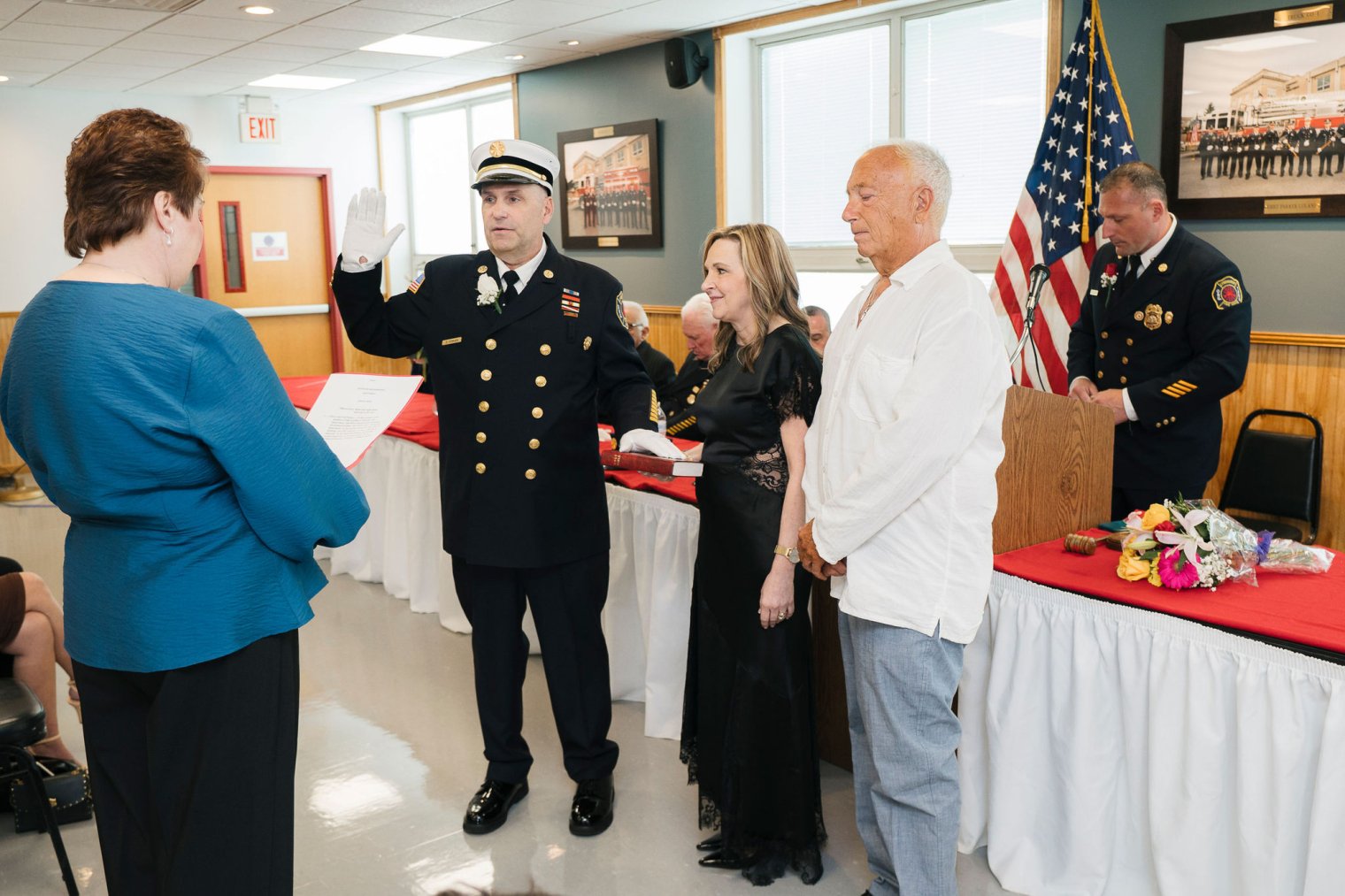
This year marks the 138th Chief's Installation of the Lyndhurst Fire Department. Robert Ferrara (Bobby) will be sworn in as Chief of the Department and will make history as the first Chief in the department's history to serve 3 separate terms as Chief.
The department's leadership structure follows a 3 year progression, with members serving in the Assistant Chief positions before advancing to Chief. Bobby has successfully completed this leadership cycle multiple times.
John Keane Awarded Twice in 2026 for Firefighter of the Year
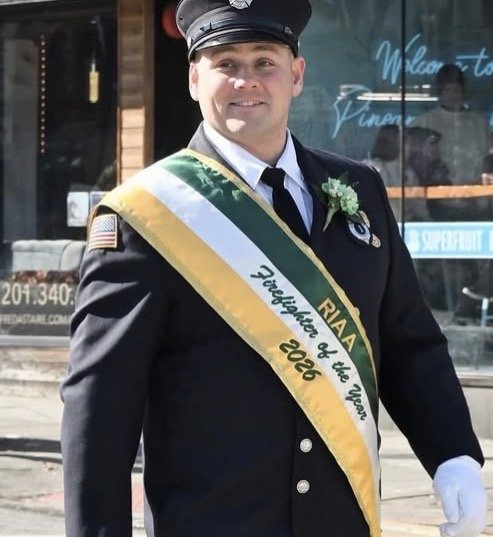
In 2026, Assistant Director of Fire Safety John Keane was selected as Firefighter of the Year by two separate organizations.
Earlier this year, the Rutherford Irish American Association named Keane their Firefighter of the Year, and he marched in their Annual St. Patrick's Day Parade on March 1, 2026.
Most recently, Keane received this same honor from Lyndhurst American Legion Post 139 as part of their annual Americanism Awards. He has been an active firefighter with the Lyndhurst Fire Department since 2009.