
College Administration Contacts
The College of Science and Mathematics is comprised of multiple offices, departments and institutes. Find specific contact information for these areas below.
Dean's Office
- College of Science and Mathematics
- csam-deans-office@montclair.edu
- 973-655-5352
- Center for Environmental & Life Sciences room 206
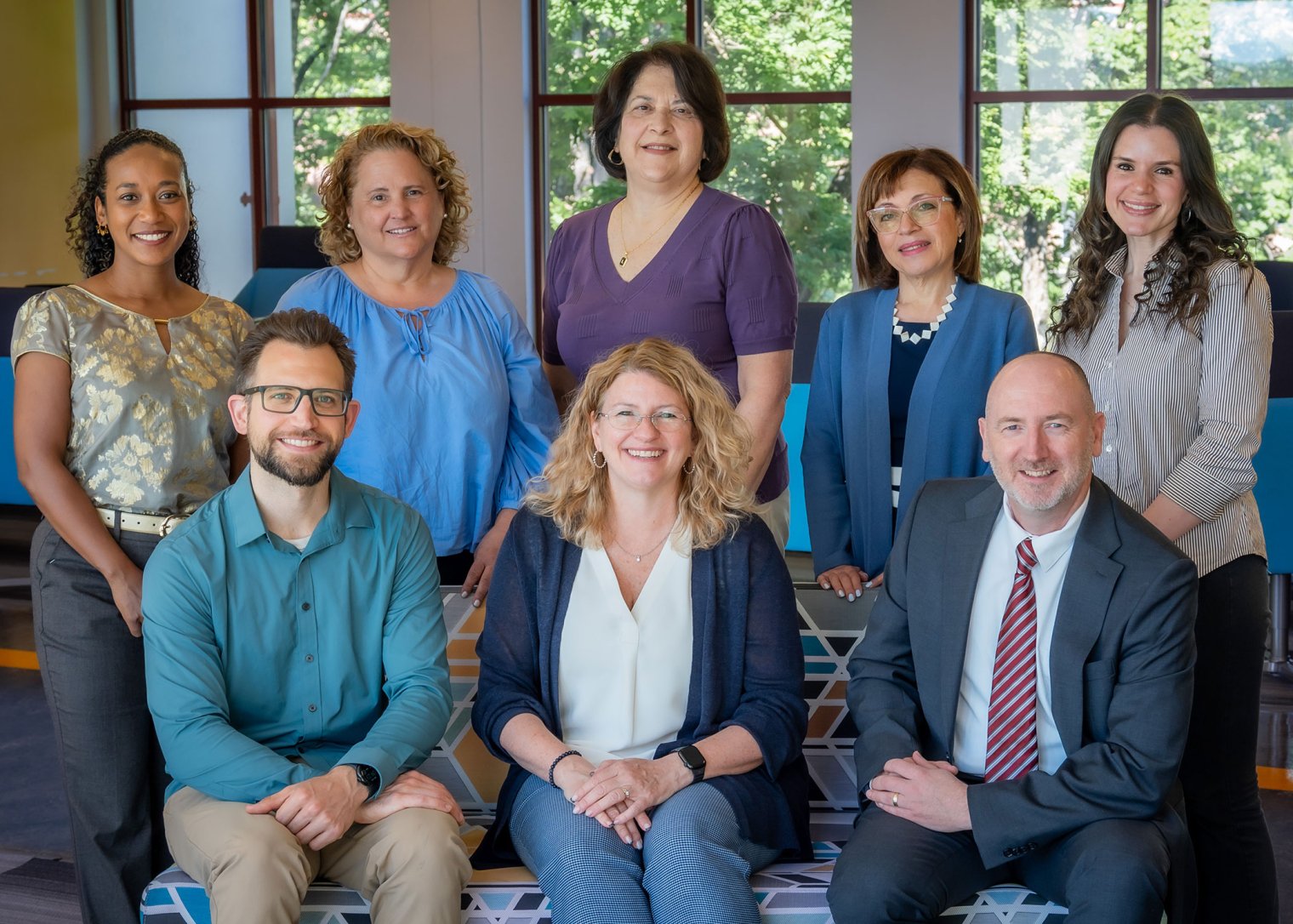
Dean's Office Staff
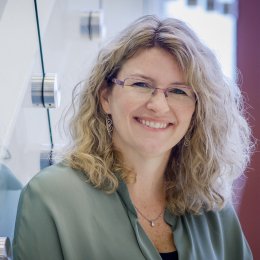
Lora Billings
- Dean, College of Science and Mathematics
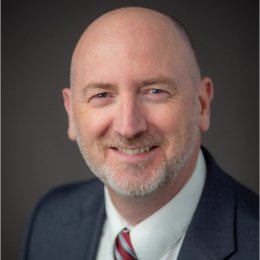
Gerard Davidson
- Associate Dean for Academic Affairs
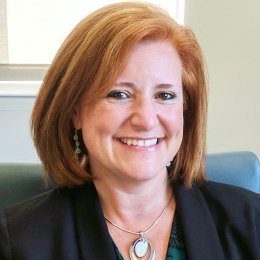
Amy Tuininga
- Associate Dean for Research and Partnerships
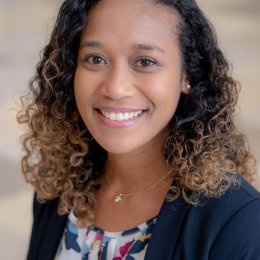
Celeste Van Nice
- Assistant Dean for Student Affairs
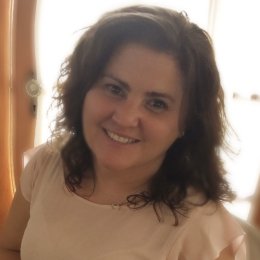
Nicole Weir
- Assistant Dean for Special Programs and Professional Education
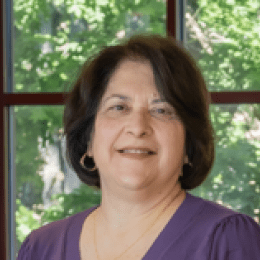
Lisa Zocchio
- Executive Administrator and Finance Specialist
College Budget and Finance
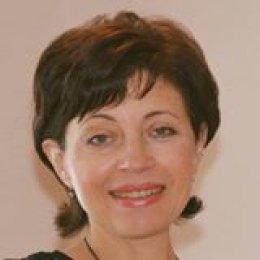
Polina Chelnitsky
- Director of Budget and Finance
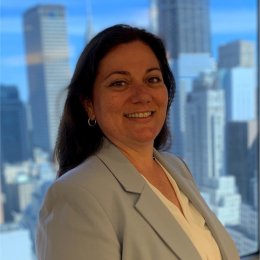
Michele Papio
- Finance and Projects Specialist
Departments
The Department of Biology strives to foster a critical-thinking mentality and a desire to discover new knowledge. We impart rigorous scientific reasoning and generally imperative skills in budding life scientists that they can apply in any career. Department faculty interact closely with students in the classroom, in the laboratory and in the field. This immersive environment develops practical and intellectual skills that ensure our graduates are prepared to succeed in careers our local and global communities need.
- Biology
- biology@montclair.edu
- (973) 655-4397
- Irvin D. Reid Hall, Room 107
- Chemistry and Biochemistry
- chem@montclair.edu
- 973-655-5140
- Richardson Hall room 213
Earth and Environmental Studies Department
The Department of Earth and Environmental Studies has the dual benefits of a small department where our students and faculty members know each other by name, but one that is large in stature through our world-class faculty who provide hands-on learning experience in projects supported by NASA, the U.S. Environmental Protection Agency, the National Science Foundation, and carried out in study areas including the Alaska Arctic Tundra, Antarctica, and every place in between.
- 973-655-4448
- Center for Environmental and Life Sciences Room 220
The Department of Mathematics is committed to supporting all learners form a deeper appreciation for the power, role, relevance and beauty of mathematics within a dynamic, collaborative and personalized environment. Our undergraduate and graduate programs encourage students to think critically and creatively as they pursue purposeful questions from multiple perspectives. We embrace and advance connections among the sciences, arts, humanities and business through mathematics. Students are supported as they become more informed citizens, prepared for graduate studies, teaching and a variety of careers that meet their aspirations and the needs of an ever-changing society.
- Mathematics
- 973-655-4263
- Center for Computing and Information Science suite 425
Physics and Astronomy Department
Physics is a difficult subject, and pursuing a physics degree will require more than just a passing interest in physics or astronomy. You will be expected to work hard and dig deeply into the subject. If you are up for the challenge, we hope you’ll consider joining our department. There are many advantages of studying Physics with us. Our faculty size and number of majors allows for small classes and individual attention. Here, your professors will know you. There are multiple opportunities for research with faculty, including as part of a group focused on the LIGO gravitational-wave detector, which helped discover the first black hole collisions and led to the 2017 Nobel Prize in Physics. Our active Physics Club connects you with other physics majors, weekly activities, and free food! Our recently revised curriculum provides excellent preparation for STEM careers or graduate study. Recently renovated lab spaces have state-of-the-art new equipment: learn about atomic/nuclear physics, optics, and more! Two seminar courses prepare you for the physics major and set you on the path for post-graduation success. Our students have a strong track record of acceptance to graduate schools, landing top high school teaching positions, and corporate employment. Multiple degree paths provide a range of options suited to your talents and interests.
- Physics and Astronomy
- 973-655-7794
- Richardson Hall room 213
- School of Computing
- soc-help@montclair.edu
- 9736554166
- Center for Computing and Information Science room 327
Student Resources
College Academic Advising
Planning and preparation for success throughout their college experience
- csamssc@montclair.edu
- 973-655-3329
- Richardson Hall room 283
College Career Services
Assisting with career exploration, graduate and professional school preparation, internship and job searches or specialized career advising needs
- csamcareers@montclair.edu
- 973-655-7793
- Schmitt Hall room 384
CSAM IT
Computer Operations for Research and Education (CORE)
Assisting CSAM faculty and staff with all classroom technology: projectors, desktops, etc., as well as computers and devices leased from the University.
- csamhelp@montclair.edu
- 973-655-5414
- Richardson Hall room 110
Centers and Institutes
Clean Energy and Sustainability Analytics Center (CESAC)
The Clean Energy and Sustainability Analytics Center is a public research and technical assistance center that facilitates innovative research, technology and sustainability solutions. The Center provides research, education programs, and support to address complex local to global challenges. Our approach is rooted in collaborative partnerships along with long-term environmental and economic solutions moving towards a sustainable future. The Center advances sustainable energy solutions, promotes initiatives and implements practices that foster collaboration between industry, government, and academia and translate research into practical applications.
- cesac@montclair.edu
- 973-655-3979
- Overlook Corporate Center, 150 Clove Road, Suite 200B, Little Falls, NJ 07424
- cesac@montclair.edu
- 973-655-3979
- CCIS, Suite 116, 1 Normal Ave, Montclair, NJ 07043
Microscopy and Microanalysis Research Laboratory
The Microscopy and Microanalysis Research Laboratory provides basic to advanced training in all aspects of TEM and SEM. Transmission electron microscopy (TEM) uses a particle beam of electrons through specimens to generate a highly-magnified visualization. Scanning electron microscopy (SEM) produces images of a sample by scanning the surface with a focused beam of electrons. We cover the full process from specimen preparation to tissue thick/thin sectioning. We host formal semester long courses offered by the College of Science and Mathematics for advanced undergraduate and graduate students. This provides invaluable skills using SEM and TEM students can apply to their research projects.
- Microscopy and Microanalysis Research Laboratory
- wul@montclair.edu
- 973-655-2028
- Center for Environmental & Life Sciences Suite 101
PSEG Institute for Sustainability Studies
The PSEG Institute for Sustainability Studies (PSEG ISS) is a local leader in the sustainability space, supporting trans-disciplinary research, community projects, workforce development, and outreach and education to address sustainability needs both locally and globally. Through partnerships with New Jersey-based and multi-national corporations and organizations, PSEG ISS implements sustainability initiatives focused on topics ranging from climate change, emissions, and energy, to waste, clean water, and food insecurity. To learn more about the Institute and our activities, see the additional links and information provided below!
- PSEG Institute for Sustainability Studies
- psegiss@montclair.edu
- Center for Environmental & Life Sciences, Suite 100, 1 Normal Ave, Montclair, NJ 07043
Professional Resources in Science and Mathematics (PRISM)
PRISM (Professional Resources in Science and Mathematics) at Montclair State University is a New Jersey STEM Professional Development Provider. PRISM provides a center for continuous learning and skill enhancement to improve teaching practices, curriculum design, and student outcomes in biological and biomedical science, computer and information science, engineering, health science, mathematics and statistics, and physical sciences like astronomy, physics, chemistry, and earth science. Teacher professional development activities at PRISM align with the New Jersey Student Learning Standards for Science (NJSLS-S).
Established in 2007 within the College of Science and Mathematics at Montclair State University, the Margaret and Herman Sokol Institute for Pharmaceutical Life Sciences advances research and innovation aimed at addressing global health challenges. The Institute fosters transdisciplinary collaboration among faculty, students, academic partners, and industry researchers across fields including medicinal chemistry, pharmacology, biochemistry, natural products chemistry, molecular biology, computational sciences, and environmental toxicology. It also supports research in emerging areas such as biomaterials, biopolymers, and nanotechnology