The Power of Questioning: How Toni Dornhard found their Voice at Montclair
Finding Your Own Path: Toni Dornhard’s Interdisciplinary Journey at CHSS
For Toni Dornhard (they/them), asking questions has been a recurrent theme throughout their academic career at Montclair State University.
“Before college I was told how to act and what to say, and I wasn’t really supposed to question those things. But in philosophy, you are supposed to question everything. It finally felt like I can start becoming who I truly am, and this switch has been the biggest switch in my life.”
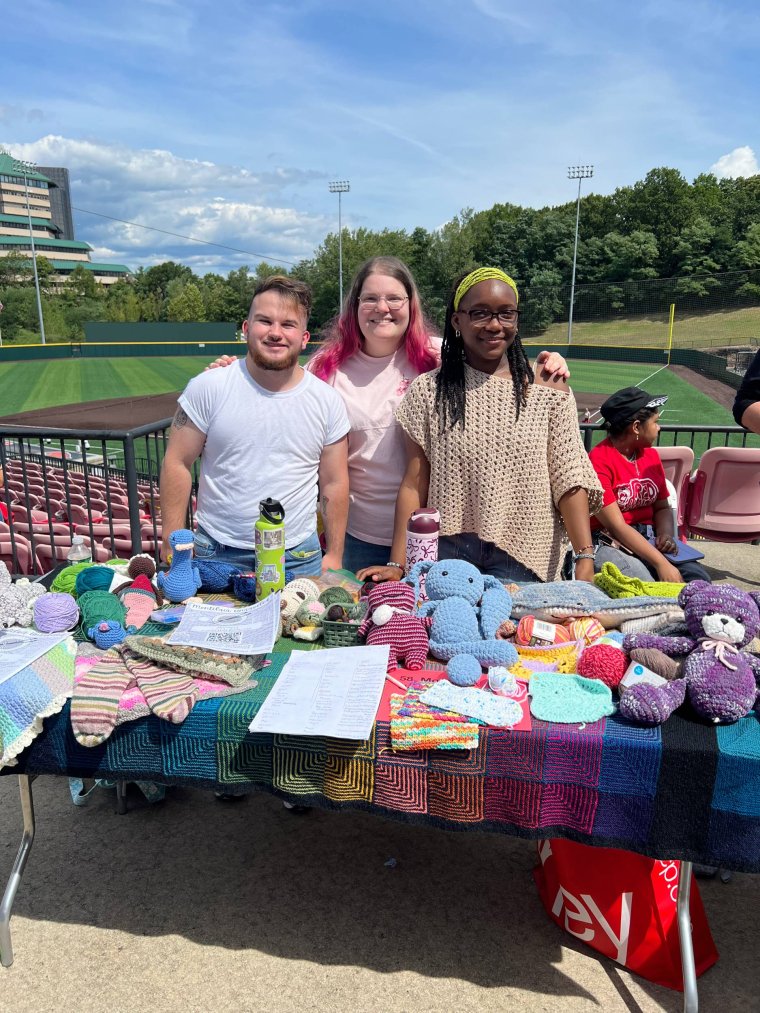
As an Honors Edge student, Dornhard graduated as a double major in both Philosophy and Classics, while minoring in Psychology, Cognitive Science, Myth Studies, and Ancient Mediterranean Civilizations. Besides being drawn to academia, Dornhard has also balanced being part of the Student Government Association, Players, SLAM, Unraveled Club, ASL Club, the Tri Alpha Sorority, and as a Resident Assistant.
Discovering a Passion for Philosophy
Psychology initially interested Dornhard, and introduced them to indepth academic research. During their freshman year, they switched majors from Psychology to Philosophy and minored in Psychology instead. Dornhard credited their Professor Francis Hittinger of the history department for first introducing them to critical philosophical concepts in the class “Honors Great Books and Ideas I”.
“I became hooked,” they described, “Philosophy is so intriguing because it knowingly tries to answer the hard questions in life.” Dornhard acknowledged that philosophy as a subject of study has been dismissed and depreciated as either nonsense or too rigorous. Despite outside criticism, they have highlighted that philosophy teaches one of the most important soft skills, which is how to critically analyze a problem. They mentioned how different philosophical topics such as ethics, logic, or even metaphysics have critical thinking as a fundamental principle.
Paving a new Path
Dornhard also thanked Classics Professor Prudence Jones for introducing them to Latin. “I fell in love with it because it took learning a step deeper and made the sentences that I was actually reading a challenge along with what was being said.” When Dornhard took Celtic Mythology, Professor Jones suggested that if she wanted to continue taking mythology and Latin courses to consider double majoring.
“I was a little nervous about the logistics of this, but I figured that I might as well give it a try.” They explained how the Classics, Humanities and Philosophy department within the College of Humanities and Social Sciences were very accommodating and how they were able to pursue their studies exactly how they wanted.
Strengthening Community through Inclusivity
There were many classes that made a lasting impact on Dornhard. One particular course "Cognitive Neuroscience of Neurodiversity and Disability” piqued their interest in different ways.
“My professor for this class, Julian David-Drori not only taught me the fundamental basics of neurological disabilities and what chemical imbalance or difference that happened physically, but he also talked about the importance of focusing on people who have mental disabilities and how to include everyone in common speech and philosophical debate.” Dornhard described that the focus on inclusivity during the course continually inspires them to include everyone, not just those who have been traditionally centered in the past.
Supportive Faculty
Many CHSS professors have made a significant impact on Dornhard’s academic career, such as Professor Hittinger, Professor Jones, Professor David-Drori and Professor Quiros. One other Professor that has supported Dornhard is Assistant Professor Jon Morgan of the Philosophy Department.
“He was always so supportive of whatever I wanted to achieve and guided me on how to get there.” Dornhard described how Professor Morgan encouraged them to try double majoring, to write a paper on a more complex topic instead of an easier option, pushed them enough to know that they would succeed, and was there if they had to reevaluate their time. “When I decided that I wanted to teach elementary students with disabilities in urban communities he told me to keep in touch because he knows I am going to do great things…the best thing you can do for yourself in college would be to have someone like Jon on your side.”
Balancing the workload
For current and future Montclair students, Dornhard advised to know your limits and when to ask for help.
“I have seen so many students struggle because they didn’t recognize and ask for help when they needed it.” Dornhard described that taking personal time for one’s own sake is especially important. “This is how you can achieve great things, not working until you quit.”
Looking Ahead
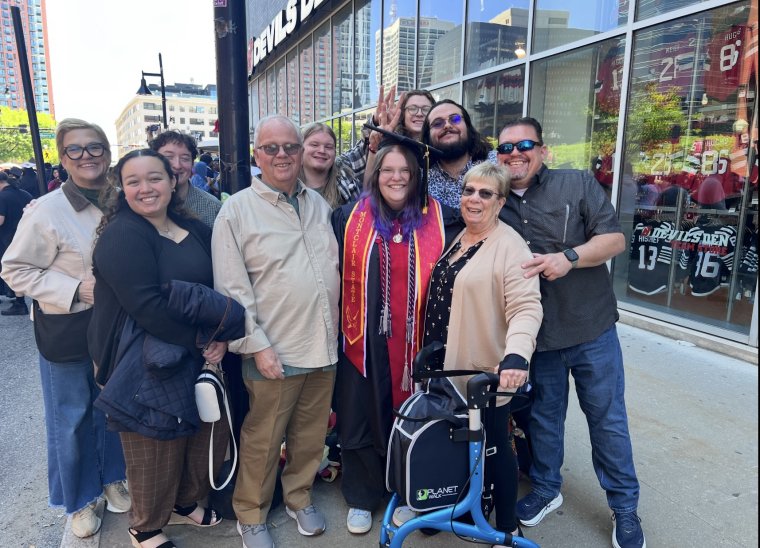
This fall, Dornhard will be attending NYU as part of an MA program that awards teacher certification for grades 1-6 and special education grades K-12. They will also complete a teaching residency in the Syracuse City School District.
Written by Maria Lachanaris, 2026 Fulcomer Intern
- Published
- Type
- Topic
- School or College