Alumni Spotlight: Michael Hughes ’90
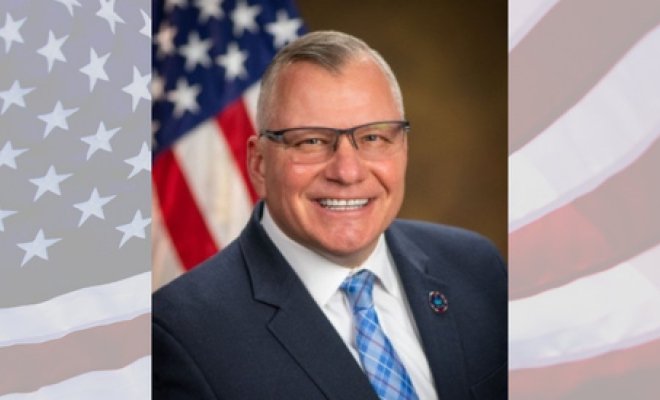
Michael Hughes ’90, director of INTERPOL Washington, circles the globe, helping to ensure that 195 unique countries coordinate their resources to fight transnational crime and to implement crucial humanitarian efforts. As head of the United States National Central Bureau and a member of INTERPOL’s 13-member executive committee, he is helping to bring together diverse voices with the shared goal of making the world safe for all.
Here is the cleaned-up version of the text, with all those awkward mid-sentence line breaks removed so it flows smoothly.
It is easy for most of us to go through life without thinking too much about international crime fighting – unless, of course, we are catching up on world news or watching the latest action flick. But for Michael Hughes ’90, transnational criminal intelligence is all in a day’s work.
Hughes is director of INTERPOL Washington, the U.S. National Central Bureau (USNCB), which is a component of the U.S. Department of Justice. The U.S. is one of 195-member countries in the international INTERPOL organization, which is based in Lyon, France. He will try to tell you that his career isn’t what it might seem from the movies, before noting that he helps to coordinate criminal intelligence among INTERPOL’s 195 countries, sometimes traveling worldwide. And he has Top Secret/Sensitive Compartmented Information (TS/SCI) clearance.
“INTERPOL, the organization, does not have any official policing powers. Its investigative authority is derived from its 195 member country National Central Bureaus and law enforcement agencies. The USNCB is responsible for coordinating criminal information exchange between our more than 18,000 domestic U.S. law enforcement agencies and our international counterparts around the globe,” he explains, noting that the organization was officially established in 1923. “We are a communication platform for criminal investigative information for all transnational crimes including human trafficking, cybercrime, terrorism and art theft, as well as for humanitarian efforts. We enable countries to work together to keep the world safe.”
From Hughes’ perspective, his work is as much about diplomacy as it is about law enforcement. “It is crucial that we take the time to research other cultures and to understand their priorities,” he says. “We need to be on top of developments everywhere, and to be sensitive to history as well as to how societies are changing over time.”
International diplomacy was not top of mind for Hughes when he was preparing for college, however. “I played football for Wallington High School and wanted to continue playing,” he says. “Montclair offered me a spot on their junior varsity team. I also liked the fact that I could commute to campus. It was the right fit for me.”
He enjoyed his time as part of the Montclair football team, but stepped away from the program to work full-time at a local pharmacy while completing his degree in Political Science with a minor in Criminal Justice, a nod to his grandfather’s career in law enforcement.
Hughes sat for the LSATs with the idea that he would go to law school but at the last minute he pivoted, submitting applications to the New Jersey State Police and the U.S. Marshals Service. He chose the federal program. “I felt I needed a more wide-ranging scope of possibilities and the Marshals offered that,” he says.
Early assignments involved working with the FBI on a violent crimes task force in the District of New Jersey and also as an Inspector in the Witness Security Program. He also received a fellowship through Georgetown University and served for a couple of years as a legislative fellow in the United States Senate, working for New Jersey Senator Frank Lautenberg. When he returned to the Marshals, he climbed the agency’s ladder quickly. By 2011, he was appointed United States Marshal by the President of the United States, with the consent of the U.S. Senate.
He joined INTERPOL Washington in 2018, and in 2021 was named the agency’s director. That year, he was elected by INTERPOL’s 195-member-country General Assembly to serve on the organization’s 13-member executive committee.
“As a delegate for the Americas to the Committee, I work to ensure that every member country’s voice is being heard,” he says. “Diplomacy and appreciation for diversity are essential.”
The complex interactions of 195 unique countries often have Hughes thinking back to his college days. “Montclair provided my first experiences with a diverse community, and with diversity of thought,” he says. “I formed relationships with classmates from different backgrounds, and my professors challenged me to think in different ways. I developed my ability to consider new ideas and perspectives.”
He points to an elective karate class as one example. “I took the class to stay active after leaving the football team,” he recalls. “It opened up a world for me, teaching discipline and helping me to become pragmatic in my thought processes. I continued studying and practicing karate for decades, and even competed in the sport.”
Hughes focuses on discipline and pragmatism when discussing his career, but his volunteer activity reveals a deeply held passion for fighting crime. His memberships include the National Advisory Board of the National Center for Spectator Sports Safety and Security, the INTERPOL Advisory Group on Financial Matters, ASIS International, the District of Columbia Law Enforcement Executive Task Force, the National Sheriff’s Association, the International Association of Chiefs of Police, the International Liaison Officers Association, the Federal Law Enforcement Officers Association, and the Fraternal Order of Police.
Despite his international stature and his job’s globe-circling requirements, Hughes keeps up with Montclair news. “Reading about Montclair makes me smile,” he says. “I am aware of all of the new construction and programs, and I enjoy learning about the priorities of the new president.”
He encourages today’s students with a positive and pragmatic perspective: “The world is always full of change. Change is inevitable, and it is something we all have to deal with, so do so in a positive way. Remember that one person can make a difference, so go for it!”
- Published
- Type
- Topic