
Microscopy and Microanalysis Research Laboratory
- College of Science and Mathematics
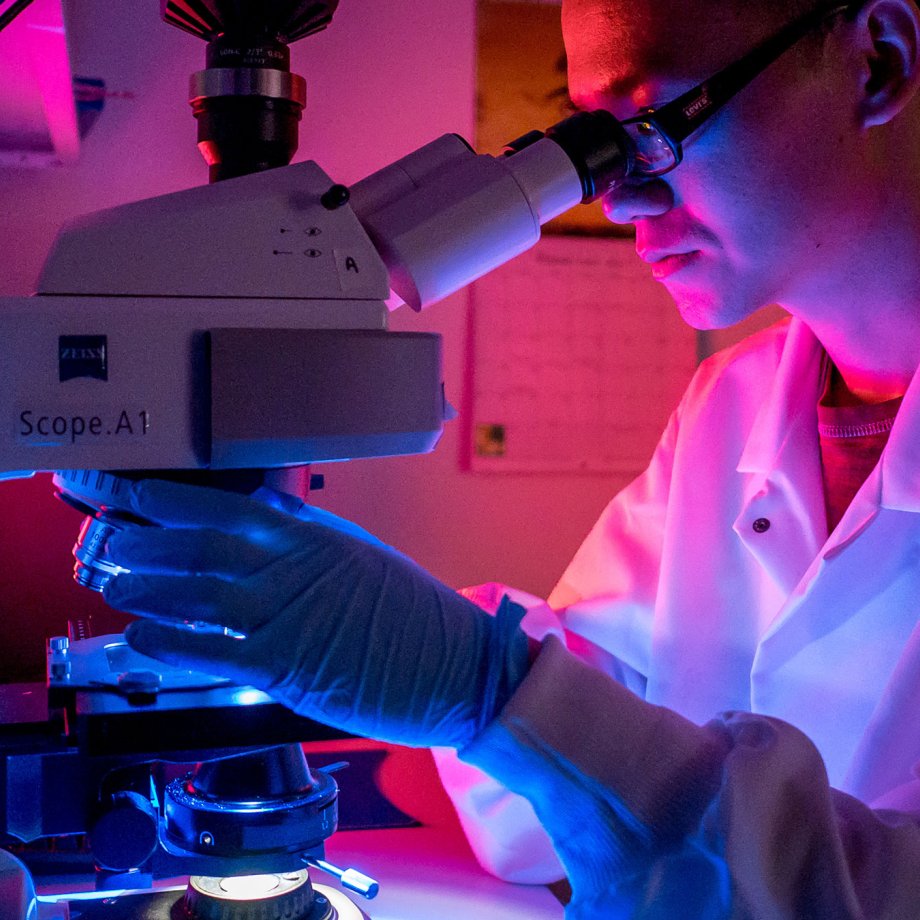
The Microscopy and Microanalysis Research Laboratory provides basic to advanced training in all aspects of TEM and SEM. Transmission electron microscopy (TEM) uses a particle beam of electrons through specimens to generate a highly-magnified visualization. Scanning electron microscopy (SEM) produces images of a sample by scanning the surface with a focused beam of electrons. We cover the full process from specimen preparation to tissue thick/thin sectioning. We host formal semester long courses offered by the College of Science and Mathematics for advanced undergraduate and graduate students. This provides invaluable skills using SEM and TEM students can apply to their research projects.
- wul@montclair.edu
- 973-655-2028
- Center for Environmental & Life Sciences Suite 101
- Monday - Friday 8:30am - 5:00pm
Director
Laying Wu
- Electron Microscopy Specialist/Lab Director
Committee
Stefanie Brachfeld
- Vice Provost for Research
Polina Chelnitsky
- Director of Budget and Finance
Amy Tuininga
- Associate Dean for Research and Partnerships
Affiliated Faculty
Paul Bologna
- Professor
Carlos Molina
- Professor
Thomas Mueller
- Assistant Professor
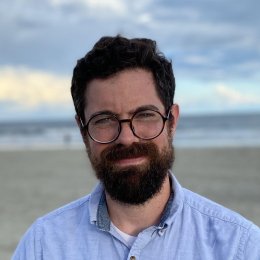
Christos Suriano
- Assistant Professor
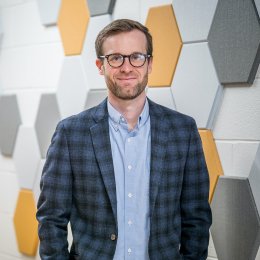
Glen O'Neil
- Associate Professor
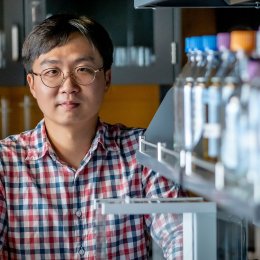
Eli Lee
- Associate Professor
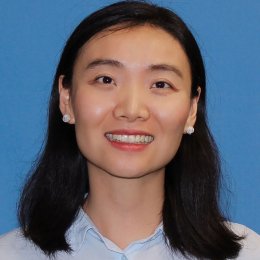
Wanlu Li
- Assistant Professor
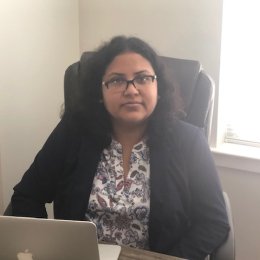
Amrita Sarkar
- Associate Professor
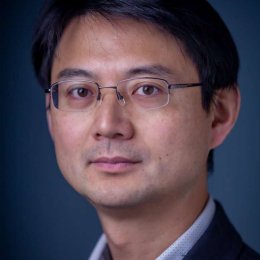
Yang Deng
- Professor
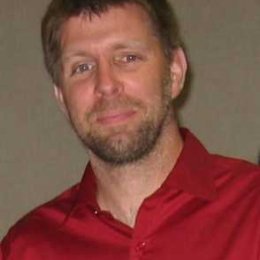
Matthew Gorring
- Associate Professor
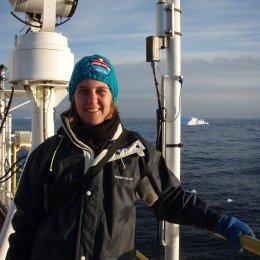
Sandra Passchier
- Professor
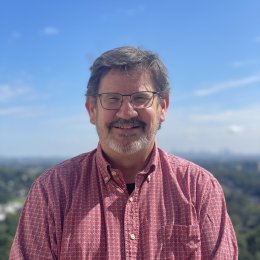
Greg Pope
- Professor
Training
To meet the varied needs of potential users of the instruments and facilities of the MMRL, the MMRL staff provide instruction and on-site operational training. This will cover all aspects of transmission electron microscopy (TEM) and scanning electron microscopy (SEM), from specimen preparation to tissue thick/thin sectioning. Both instrumental operation and specimen preparation training will be offered as requested to faculty, postdoctoral researchers, technicians and graduate students. On-site training courses for new and experienced users are available upon request in the EM imaging facilities. For training or assistance the researcher should contact the MMRL Director, Laying Wu, a week or two (the earlier the better) prior to needing the microscopy work.
Instrumental operation training
Intended to teach the fundamentals of instrument operation
Specimen preparation training
Learn specific aspects of specimen preparation that are related to their research programs
Anyone scheduled to use the MMRL facilities is expected to do so at the assigned time. If one cannot come to the MMRL or the sample is not ready, contact the EM staff in advance to cancel the reservation. Repeatedly missing your appointment time may lead to privileges for use of the MMRL facilities to be restricted.
Lab Safety
To reduce injuries, prevent abuse and damage to equipment and to maintain a healthy environment in the lab, the EM users have to obey the following basic precautionary steps:
- Food and drink are not allowed in any EM lab environment. Keep food and drinks away from equipment, electrical outlets and out of the labs. In the event any spills make sure all equipment is unplugged and in the off position before attempting to remove or clean up the spill.
- Dispose of all chemical waste properly. Check any guidelines for disposal of chemicals and solutions before discarding.
- Never mix chemicals in sink drains.
- Properly label all specimen or chemical containers. Be sure to include shelf life and/or expiration date.
- Properly store all supplies. Do not leave on any work surface when not in use.
- Clear all surface areas before and after use.
- Clear all aisles to allow easy navigation, particularly in the case of a fire or emergency, and to prevent any mishaps such as tripping or slipping accidents.
- Wear safety gear and eye protection, when necessary.
- Do not block any fire exits, windows or other egresses.
- Do not block access to fire extinguishers, eye washes or safety showers.
Rates
Hourly charges for internal, external academic and external industrial users will be calculated for the equipment's maintenance and supply costs.
| Service | Internal Academic Research User Rates | External Academic Research User Rates | External Non-Academic User Rates |
|---|---|---|---|
| Equipment and Support (cost per hour) | |||
| Hitachi S-3400N VP SEM | $30.00 | $50.00 | $150.00 |
| Hitachi H-7500 TEM | $30.00 | $50.00 | $150.00 |
| Nikon C2 CLSM | $30.00 | $50.00 | $150.00 |
| Technical support and labor service | $50.00 | $100.00 | $100.00 |
| Microtomy (cost per sample) | |||
| Thick sectioning | $30.00 | $40.00 | $60.00 |
| Ultrathin sectioning | $40.00 | $50.00 | $80.00 |
| Auxiliary Instruments (cost per run) | |||
| Critical point drying CO2 and cylinder costs | $30.00 | $50.00 | $60.00 |
| Sputter coating metal target, Argon and cylinder costs | $30.00 | $50.00 | $60.00 |
| Carbon evaporation coating | $30.00 | $50.00 | $60.00 |
| Sample Preparation (cost per sample) | |||
| Biological samples for SEM conventional fixation and dehydration | $30.00 | $40.00 | $70.00 |
| Biological samples for TEM fixation, dehydration, infiltration and embedding in resin | $40.00 | $50.00 | $100.00 |
| Tissue samples preparation and paraffin embedding | $40.00 | $50.00 | $100.00 |
| Negative staining or double staining | $15.00 | $20.00 | $20.00 |
| Histochemical staining H and E stain | $30.00 | $40.00 | $70.00 |
| Supplies (cost per each) | |||
| Grid box | $12.00 | $12.00 | |
| Regular carbon coated TEM grid | $3.00 | $3.00 | |
Failure to make payments may result in loss of privileges in the MMRL until the charge is paid.