Future Teachers Take Action at the State Capitol
Teacher education students take their voices to the State Capitol, advocating for financial support for student teachers across New Jersey.
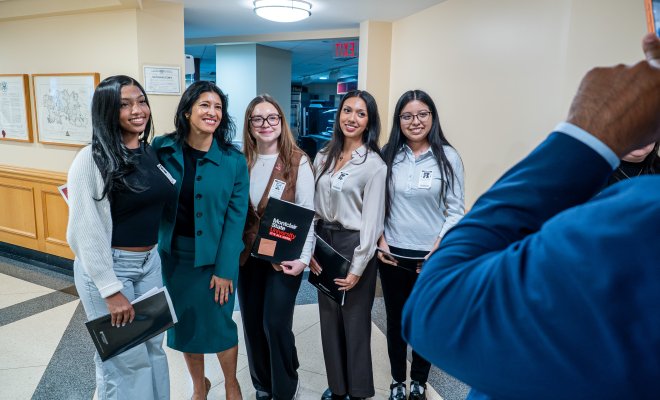
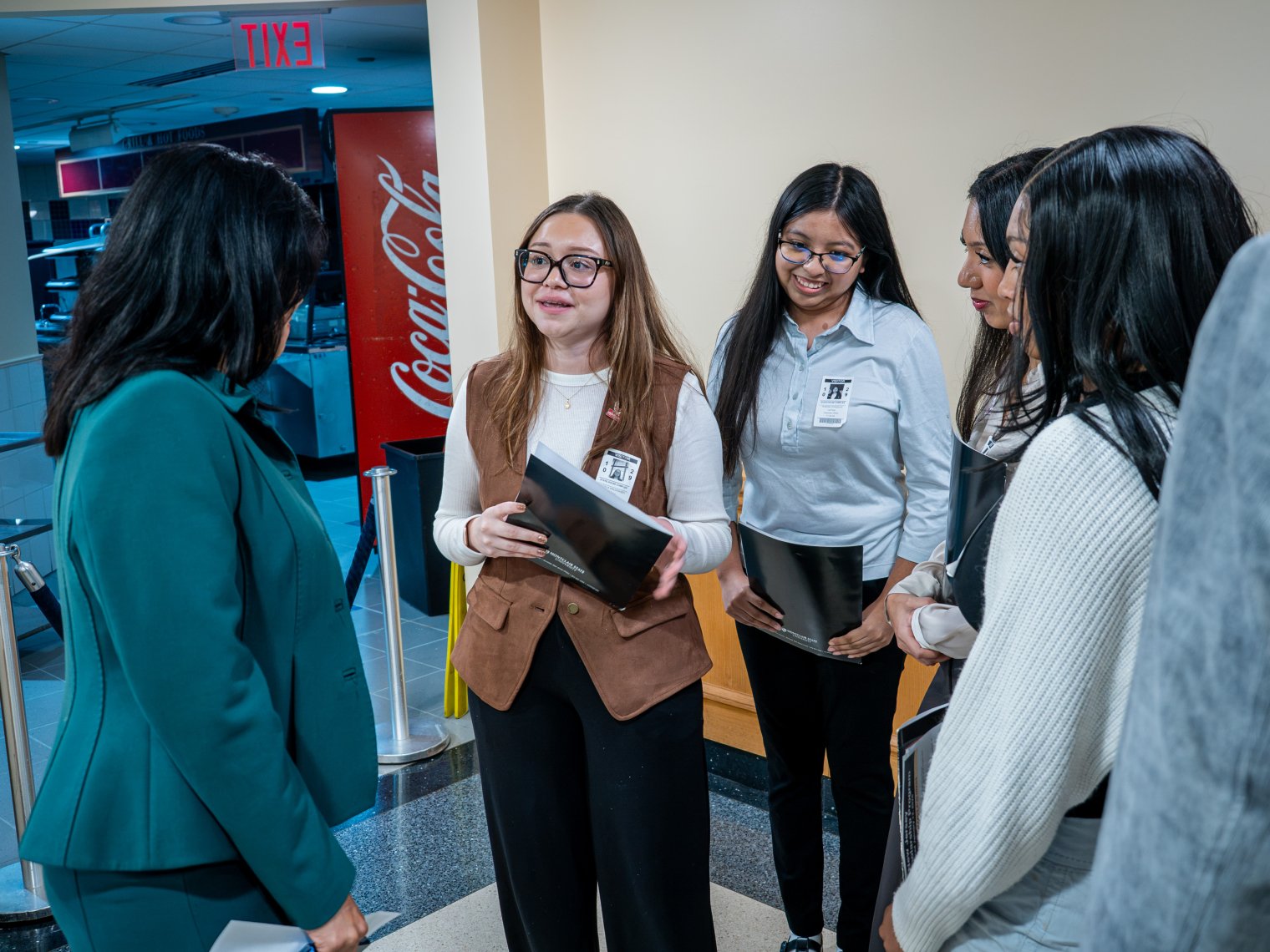
Teacher Education Students meet with Assemblywoman Alixon Collazos-Gill at the New Jersey State Capitol.
pictured: Lyric Thompson, Assemblywoman Collazos-Gill, Natalia Maldonado, Maria Lachanaris, Yesena Gonzalez
For students preparing to become teachers, student teaching is an essential step toward entering the profession. But the demands of a full-time classroom placement can make it difficult to balance teaching responsibilities with the need to earn an income.
A group of students from the College of Education and Engaged Learning recently brought that challenge directly to New Jersey lawmakers, traveling to the State Capitol in Trenton to advocate for legislation that would provide financial support to student teachers across the state.
The students participated in a university-organized advocacy event, meeting with legislators to champion Bill A3056/S2605, which would establish the New Jersey Student Teacher Scholarship Program. The proposed program would provide financial assistance of up to $7,200 per semester to education majors during their full-time student teaching experience, helping reduce financial barriers and making it easier for aspiring teachers to complete their preparation and enter New Jersey classrooms.
The legislation comes after New Jersey previously provided student-teaching stipends, beginning in 2023, before the funding was eliminated in the state's 2026–27 budget. For Dr. Susan Baglieri, a professor in the Department of Teaching and Learning, restoring and expanding that support is essential to attracting and retaining future educators.
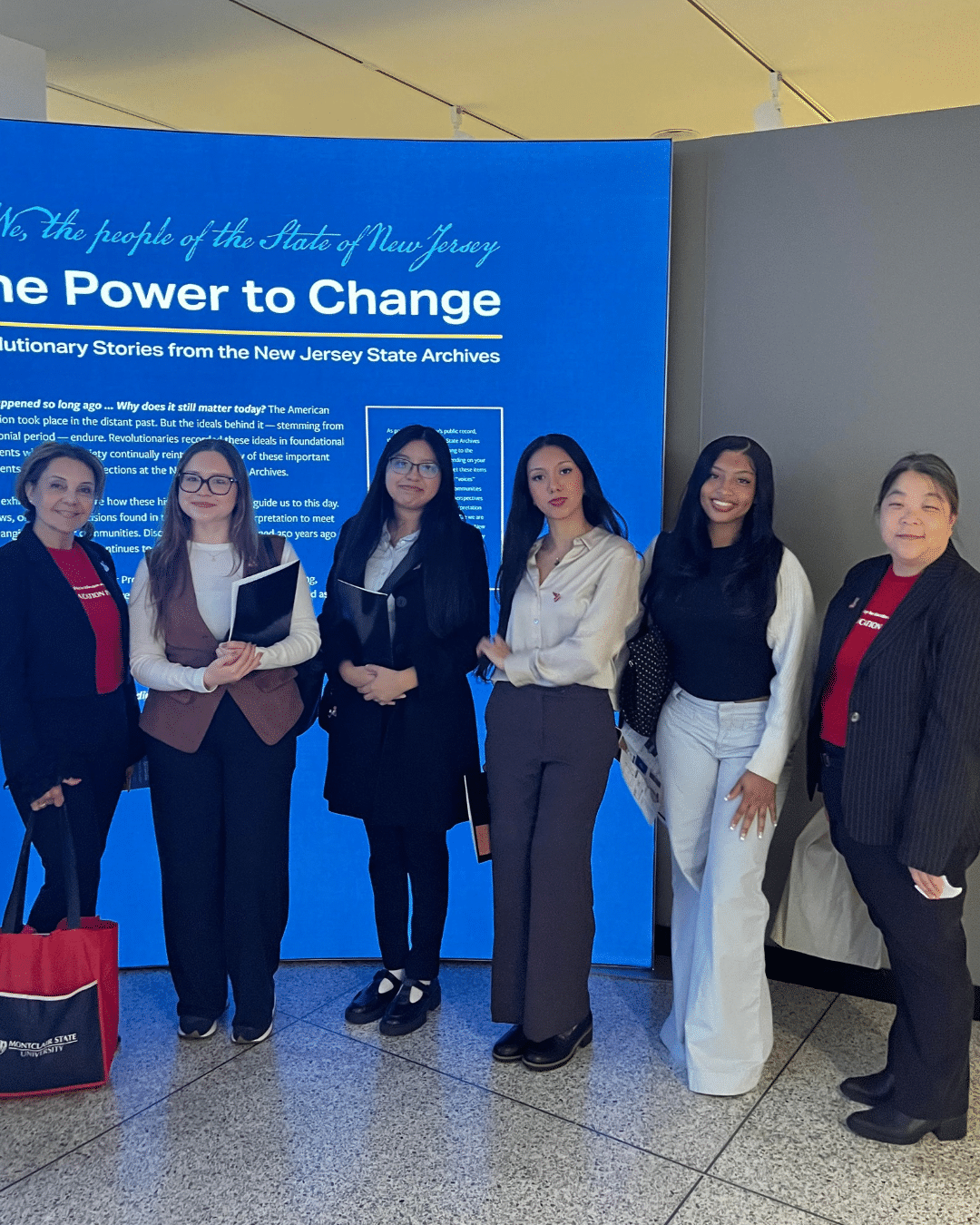
"We need a more sustainable commitment to supporting future teachers," Baglieri explained. "We want students to choose New Jersey universities and to stay here to teach in New Jersey schools."
For the students, the visit was about more than supporting legislation. It was an opportunity to share their experiences, make their voices heard, and take an active role in shaping the future of the teaching profession.
Turning Personal Experiences into Advocacy
Among the students who traveled to Trenton was Yesenia Gonzalez, a psychology major enrolled in the college's BA/MA program, where she is pursuing a bachelor's degree in psychology and a master's degree in teaching with dual certification in general and special education.
With her own student teaching experience approaching next year, Gonzalez understands firsthand why the proposed scholarship could make a difference.
"All of us are looking for ways to fund our student teaching time, because we know that we don't have a lot of time to work," Gonzalez explained.
As a first-generation college student, she also sees the legislation as an opportunity to make the path toward becoming a teacher more accessible.
For Gonzalez, the experience was a first. She had never visited the Capitol or spoken directly with elected officials before.
"I really felt like I was getting empowered to use my own voice," she said. "Being there on the ground, I felt like I was doing something really important and significant for me and all my student teaching peers."
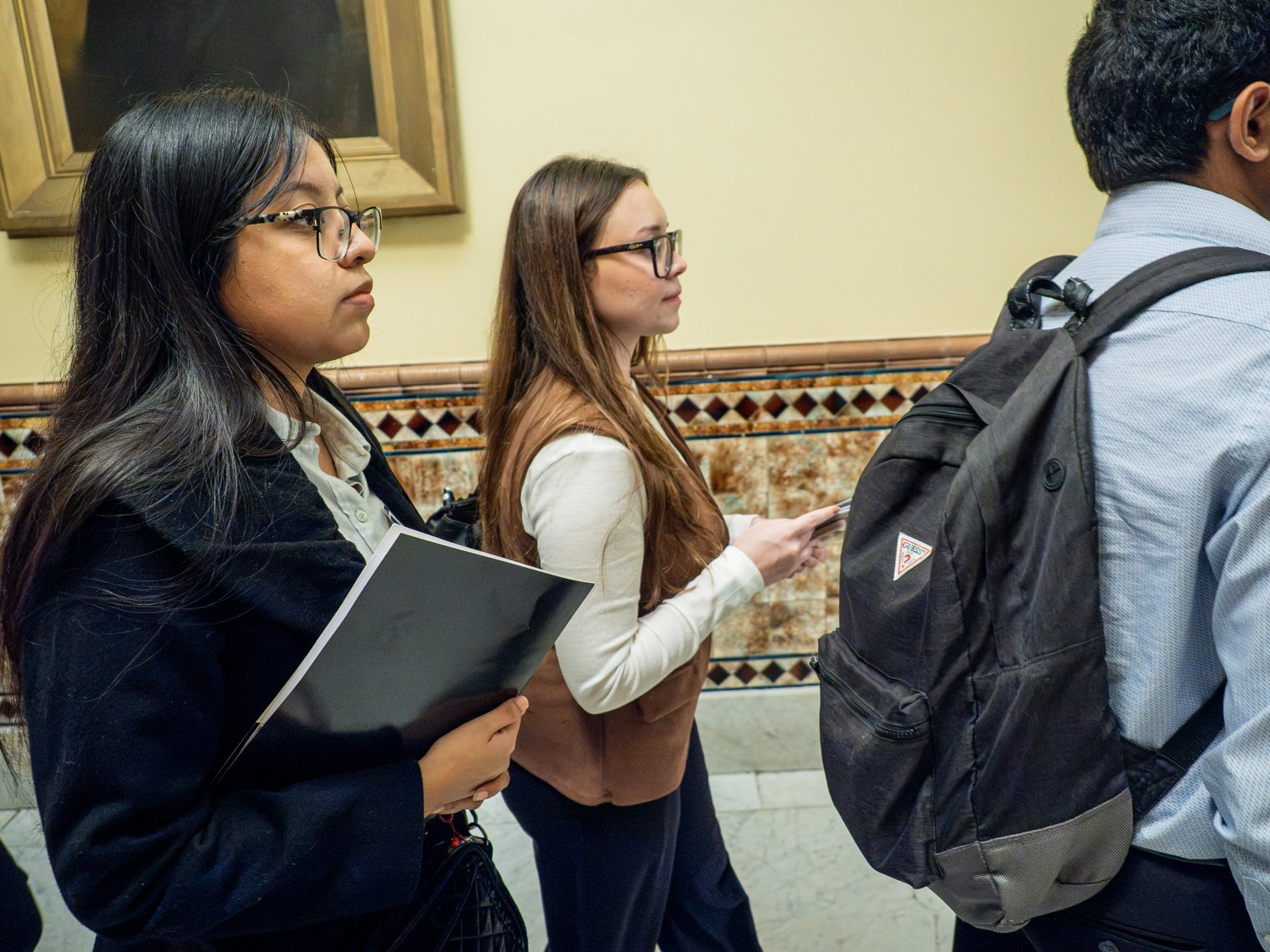
Natalia Maldonado, an Educational Foundations for Elementary Teachers major, also attended the visit. For her, advocating for the scholarship was deeply personal. During her full-time student teaching experience, she expects to have no income while still helping support her mother with household expenses and covering her own living costs.
"Even if this bill is not passed in time for my student teaching cohort, I was still able to advocate for another individual with similar responsibilities in their family," Maldonado shared.
The Power of Students Working Together
The advocacy visit was made possible through preparation and collaboration. The university's Government Relations team, including Maria Gregg and Lady Jimenez Torres, organized the larger Capitol event. In preparation, Baglieri brought together teacher education students for collaborative discussions and planning. Dr. Ellie Abdi, an adjunct in the Department of Teaching and Learning, and Baglieri accompanied the students to Trenton.
Through virtual and in-person preparation, students developed talking points, gathered information about the bill, and prepared to share both the broader need for the scholarship and their personal perspectives.
At the Capitol, they distributed informational flyers and met with legislators, including Assemblywomen Alixon Collazos-Gil, Ellen Park, and Rosy Bagolie, to discuss the legislation and the importance of investing in future educators.
Baglieri said some students were initially nervous about approaching lawmakers, so the preparation included creating informational flyers and talking points to help them feel more comfortable starting conversations.
"What was really inspiring was watching every one of our teacher education students step forward and approach Assembly members," she said. "It was exciting to see them gain confidence throughout the day and recognize that they had something important to contribute."
She also emphasized that students brought a perspective that faculty and administrators could not replicate.
"Legislators need to understand what student teaching requires, the financial sacrifices involved, and what supports would make entering the profession more accessible," Baglieri explained. "Students can tell that story in a way that faculty and administrators cannot."
Maldonado said the conversations were especially impactful because they gave students the opportunity to speak directly with the people who represent them and help shape state policy.
"They were very easy to talk to," she said. "We were able to voice our concerns not only about the stipends but also funding for Montclair State. We heard some valuable feedback from them and how they will push to help us."
Both students emphasized how much the support of their peers contributed to the experience. Working together helped them feel more confident and demonstrated the importance of collective advocacy.
"Power comes in numbers," Maldonado said. "Use the many organizations on our campus to your advantage."
For Abdi, one of the most memorable moments of the day highlighted how students were already connecting their experiences to their future roles as educators.
Standing in front of the Capitol building, Maldonado handed Abdi her phone and asked her to record a video. She wanted to fulfill a promise she had made to her second-grade students: to explain where she was going and what she was doing that day.
In the video, Maldonado explained the purpose of the Capitol, how laws are made at the state level, and why she was there, translating a complex civic process into language appropriate for young children.
"I was particularly impressed by her initiative, confidence, and ability to translate a complex civic process into concepts that young children could understand," Abdi said. "I shared with her how impressed I was and expressed my belief that she will become an excellent teacher."
Empowering Students to Make a Difference
Bill A3056/S2605 addresses a significant challenge facing aspiring educators. Financial assistance during full-time student teaching could help students remain in their teacher preparation programs, focus on their classroom experiences, and pursue certification without the added stress of balancing demanding work schedules.
For the professors who accompanied the students, the experience also offered an opportunity to connect classroom learning with real-world civic engagement.
Baglieri hoped students would leave with a better understanding of how public policy is developed and how they can participate in the process.
"Public policy isn't something that just happens somewhere else, removed from their everyday lives," she explained. "It is developed through conversations, testimony, negotiation, advocacy, and decisions made by people who represent us and who are approachable and will listen to us."
Abdi similarly viewed the visit as an extension of the classroom, giving students a firsthand understanding of civic responsibility, leadership, and the democratic process.
"Especially teacher education students, more than others, [need to understand this] because their profession is directly related to how lawmakers vote on different issues," she said.
Students continued their advocacy after the visit by following up with legislators through emails and encouraging others to contact their elected officials in support of the legislation.
"I would tell other students to just go for it, especially if what you are advocating for will help not only you, not only your family but your fellow students," Maldonado said. "Express your concerns, and make your voice heard."
By bringing their experiences directly to lawmakers, these future educators demonstrated the importance of student engagement, civic participation, and advocating for the profession they are preparing to enter. As Baglieri hopes they will carry forward throughout their careers, students don't have to wait until they become experienced teachers to help shape the profession.
They're already making their voices heard.
- Published
- Photographer
- John LaRosa